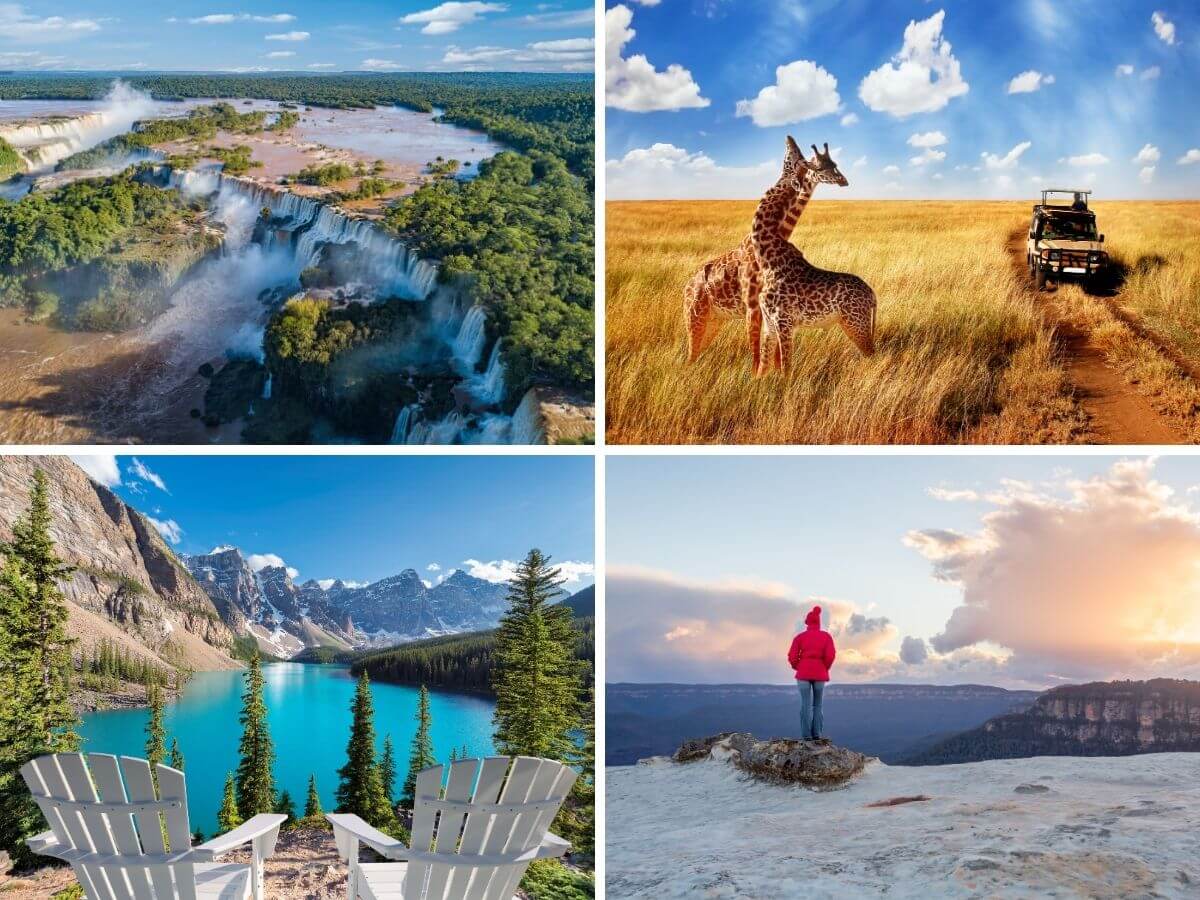
From the oldness of Yellowstone (a first-ever national park in the world) to the grandness of the Grand Canyon to the gorgeousness of Plitvice Lakes to the wildebeest of Serengeti to the biodiversity of Kakadu – Here’s a round-up of the best national parks in the world for families.
Best National Parks in the World
Grand Canyon National Park, Arizona, USA
Grand Canyon is ‘GRAND’ literally and figuratively! You can’t really capture the beauty of the Grand Canyon in its entirety. If you’re looking for an epic outdoor adventure with family, Grand Canyon National Park is the answer.
The South Rim is the most-visited and thus, touristy (read crammed) part of the park. The North Rim, owing to its less accessibility over the South Rim is lesser-visited. Also, the South Rim is open all through the year while the North Rim is open from May until October. However, hikers and skiers with backcountry permits can enter the North Rim during the winter months. The West Rim has a Skywalk, a cantilever bridge overlooking the West canyons.
There are many hiking trails in the park, Bright Angel Trail, Havasupai Falls Trail, and South Kaibab Trail are our favorite. Havasu Falls Trail is a bit strenuous trail with a 10-mile hike, one way, and is recommended for kids over 10 years. The Bright Angel Trail (3-mile round trip hike) and South Kaibab Trail (2-mile round trip hike) can easily be done with younger kids. Make sure to carry plenty of water and snacks.
When it comes to the best lookout points (well, because Grand Canyon = incredible views), Bright Angel Point (North Rim) and Desert View, and Yavapai Point (South Rim) are the best of the lot.
There are many ways you can admire the beauty and vastness of the canyon – driving the scenic Desert View Drive, taking a helicopter ride through the canyon, whitewater rafting down the Colorado River, gasping down the canyon for its varied lookout points, and taking one of the many family-friendly hikes are few of them.
Consider using South Rim shuttle buses to travel around the Grand Canyon Village, lookout points, campgrounds, lodges, and parking lots.
If you are short on time, then opt for guided one-day tours to Grand Canyon South Rim or a tour to West Rim with Skywalk from Las Vegas. But this would just give you a glimpse into the majestic beauty.
Where to Stay: Best Western Premier Grand Canyon Squire Inn | Grand Canyon Lodge North Rim | Thunderbird Lodge South Rim
When to Go: As per the guidebooks, summer (June to August) is the best time to visit the Grand Canyon National Park but we beg to differ. We suggest you avoid the peak season and choose to visit during the quieter months of spring (March to May) or fall (September to November) for a real immersive experience.
Entry Fee: $35 per vehicle
How to Get There: The nearest airports are in Phoenix and Las Vegas. It takes a little over 4 hours from Phoenix or Las Vegas to Grand Canyon.
Expert Tip: If you are visiting the park during summer and are worried about hordes of tourists, consider going to the relatively remote North Rim for it sees fewer crowds than the South Rim.
PS: Watching a sunrise or sunset over the canyon is one of the best things to do in the Grand Canyon.
Check out our one-day Grand Canyon South Rim Itinerary to plan a perfect trip to Grand Canyon.

Yellowstone National Park, Wyoming, USA
Cath of Passports and Adventures
The best National Park around the world for families must be Yellowstone National Park, located in Wyoming, USA. This was the first National Park in the world, and it is not hard to see why.
As for the best things to do in Yellowstone with kids, take your pick. A trip to Yellowstone wouldn’t be complete without seeing Old Faithful erupt. There are other geysers and springs that will amaze kids. Hearing the roar of some of the Yellowstone waterfalls is another thing not to be missed. You can even choose from a full-day guided tour to Lower Loop, Old Faithful, and other attractions to avoid hassles.
Driving the Hayden and Lamar Valleys should be added to your itinerary as you will most likely see lots of bison in these two areas. Go very early in the morning and you might be lucky to spot wolves. Late in the evening along the riverbanks, such as the banks of the Madison River, is where you may spot elk.
And if your kids like horses or are interested in cowboys, then have dinner with the cowboys of Yellowstone at the Old West Dinner Cookout. It is a great excursion to add to your trip and the kids will love it.
Where to Stay: There are several options for family-friendly accommodation when it comes to Yellowstone. There are lodges and hotels within the park (but they book up fast), there are campgrounds and there are also lots of hotels near Yellowstone in the towns just outside the park.
When to Go: Yellowstone is best visited in summer when it is warm and dry.
Entry Fee: $35 for a 7-day pass for private vehicles.
How to Get There: The best way to reach Yellowstone is to take a road trip there. There is an airport close by but you would need to hire a car as a car is essential for exploring Yellowstone with kids.
Expert Tip: Start as early as possible to ditch the tourist crowds.

Yosemite National Park, California, USA
Constance of The Adventures of Panda Bear
Yosemite National Park is one of the most popular national parks to visit in the United States. In 1890, Yosemite National Park became the third national park in the United States and the second national park in California. The park is famous for its beautiful waterfalls and rock formations all of which can be seen from the Yosemite Valley.
Yosemite Valley is a popular destination within the park amongst families due to its many sights to see. Be sure to check out Yosemite Falls and Bridal veil falls. Both are short hikes within the valley especially if you choose to take the hike around the bases of both Yosemite Falls and Bridal veil falls.
For an amazing view of Half Dome, El Capitan, Bridalveil Falls, and Yosemite Valley below, definitely make a pit stop at Tunnel View Vista Point. It provides a picture-perfect look at all of those sights and is a great stop for photos. The best view is only a short walk from the parking lot making it friendly for children of all ages.
Where to Stay: Yosemite National Park is a great day trip from San Francisco since it is only approximately 3 hours east via 120 East. However, if you do choose to make it an overnight or weekend trip, The Ahwahnee Hotel is a great choice as it is located within Yosemite Valley and is super convenient to all the best sights. If adventure is your type, then a 3-day camping adventure at Yosemite Valley is a great option.
Book Hotels near Yosemite National Park
When to Go: Summer is the peak season for the park. But if you want to beat the crowd then spring and fall are great times to enjoy the beauty
Entry Fee: Admission costs to visit Yosemite National Park are only $35 per car for a 7-day pass.
How to Get There: Yosemite is just a 3-hour drive from San Francisco via California State Highway 120. If you don’t intend to drive, there is a small group tour from SFO to Yosemite.
Expert Tip: Plan ahead in time as accommodations fill fast!

Volcanoes National Park, Hawaii, USA
Noel Morata of Travel Photo Discovery
Probably one of the most unusual and historic national parks to visit in the United States is Volcanoes National Park on the Big Island of Hawaii. This park closed a few years ago because of active lava activity and the entire caldera collapsing created an even more impressive national park.
Now open again after ensuring public safety the park is stunning with a central caldera that is like the Grand Canyon of the Pacific and other popular attractions open again for visitors to enjoy this ever-changing park structure.
Covering an expansive park system that covers jungle and lush forests, a stark contrast to bleak lava fields, a magnificent caldera, fantastic lookout points, fantastic hikes and so many other wonderful places to explore in the park system.
This national park is fantastic for families to go and explore all the cool attractions, vistas, and places of historic interest. If you are visiting the Big Island, check out my post here on a family-friendly visit to the Big Island here for more inspiration and plan a visit all around the island.
You’ll enjoy visiting all the fun and popular attractions around the island including the beautiful Volcanoes National Park on the east side of the island.
Where to Stay: Volcano Rainforest Retreat
Book Hotels near Hawaii Volcano National Park
When to Go: It’s beautiful no matter what time of the year, though the winter months can bring some rain.
Entry Fee: $30 per vehicle valid for 7 days. There is also Hawaii Tri-park Annual Pass for $55.
How to Get There: Hilo is the closest city to the Volcanoes National Park. You can drive from Hilo (40 minutes) to the park.
Expert Tip: You need to wear sturdy hiking shoes to save your feet from sharp lava rock.

Read Next: Best National Parks in the USA for Families
Banff National Park, Canada
Jacs of Flashpacking Family
Banff National Park is Canada’s oldest National park, dating back to 1885, and it is arguably the most popular National Park in Canada.
Banff National Park is somewhere you can visit all year round, offering great skiing in the winter months and hiking in the summer months.
The reason why Banff is great for families is that it is so accessible. Many of the top sights in the park such as Lake Louise or the Athabasca Falls are just a short stroll from the car parks. The downside to this, however, is that these top sights get incredibly busy, particularly in the summer.
In terms of easy family hikes, we recommend the Fairview Lookout Trail which is a 3km round trip. You get a stunning view back over the full length of the lake to Chateau Fairmont Lake Louise. If you feel like something a bit more challenging, you can take the Agnes Tea Trail on the other side of the lake.
Where to Stay: Banff Town is the obvious place to stay in Banff National Park, but the accommodation can be quite expensive. As an alternative, you can look to stay in Canmore which is just a short drive out of the park. The Grande Rockies Resort in Canmore is a great choice for families because it offers 2-bedroom suites with kitchen facilities and a very family-friendly pool area.
When to Go: Year-round
Entry Fee: Once you reach the entrance to the park, you need to pay your park fees. The current price is $10 per day for adults or $20 per day for families. Youths 17 and under are free.
How to Get There: Banff Town is the main town in the park and is located about 125 km west of Calgary. It is an easy drive along the Trans Canada Highway.
Expert Tip: If you want to avoid crowds, you must go as early as you can. For the most popular lakes, this means just before sunrise.

Related Read: Best National Parks in Canada for Families
Plitvice Lakes National Park, Croatia
With its alluring waterfalls, crystal clear lakes, and dense landscape, Plitvice Lakes National Parks in Croatia is not only one of the best places to visit in Croatia but also one of the most beautiful national parks in Europe. Without a doubt, an essential addition to your Europe Bucket List!
A UNESCO World Heritage Site, Plitvice offers easy-to-walk wooden pathways and bridges, and many (easy to moderate for all age groups and stamina levels) hiking paths making it perfect for families with kids. Also, you don’t need to walk back, just walk the path one way, and catch a shuttle on your way back to the entrance, so no fuss with young kids.
As you walk this one of the best natural wonders in Europe and admire its beauty, don’t miss stopping at the Veliki Slap (Big Waterfall), Great Cascades (Velike Kaskade), Gradinsko Lake, and the popular viewpoints (here you’ll get the top angle view of the park) near the shuttle stop at the entrance 1.
Where to Stay: We stayed at B&B Lady of the Lake and absolutely recommend it to the families visiting Plitvice.
When to Go: Plitvice is magical whatever the season or reason though we highly suggest visiting during spring or autumn owing to the lesser crowds and pleasant weather. Take a full-day tour to Plitvice Lakes from Split or opt for a guided tour of Plitvice Lakes from Zagreb.
Entry Fee: The entrance ticket price depends on the season and ranges from 60 Kuna to 250 Kuna per adult for a one-day ticket. It is advisable to buy the skip the line tickets for the guided tour.
How to Get There: You can arrive at the park by bus, taxi, or rental car. We, of course, prefer a rental car. It takes around 2 hours from Zagreb and Zadar and 3 hours from Split.
Expert Tip: Get to the park as early as possible (as soon as it opens) to get the most out of your visit to the park.

Krka National Park
Cosette OF KarsTravels
Krka National Park in Croatia is full of waterfalls, lakes, ruins, and boat rides. The river Krka runs through the park and has 7 waterfalls. The most famous of the seven is the Skradinski Buk. This waterfall is reachable through a 1-hour hike on an easy walking path.
The hike is well-suited for families, even with small kids. What makes this waterfall extra perfect is that you can swim near it. On a hot summer day cool down here during your hike. Kids and adults alike will love this. Grab some dried fruits and nuts from a stall when you’re done swimming and hike further with mesmerizing views.
Waterfalls and swimming aren’t the only things on offer in Krka National Park. In the middle of the river Krka is Visovac Island with an abbey, church, and museum. A boat ride brings you to the island where you can wander around.
More into biking than hiking? The park has 470 kilometers of bike routes divided over 14 circular routes, of which 6 are pleasant family rides.
Where to Stay: Solaris Beach Resort in Šibenik is a perfect family-friendly option to stay at when visiting Krka National Park. View other hotels in Krka National Park.
When to Go: The park is open year-round, but swimming is only possible during the Summer months. During the winter months, not all entrances are open, nor are all the facilities present or attractions open. So, you should plan your visit during the summer months.
Entry Fee: There’s an entrance fee that differs per month, ranging from 30 Kuna per adult to 200 Kuna. For kids 7-18 it differs from 20 Kuna to 120 Kuna. Kids 7 and under are free of charge.
How to Get There: The park has 5 entrances, Lozovac is the main entrance. On the A1 take the exit Krka N.P. and follow the road between Šibenik and Knin inland until you reach Lozovac.
Expert Tip: Don’t forget to bring a towel, a swimsuit, and swim shoes.

High Tatras National Park, Slovakia
Slavka of On2Continents
The most popular and the most beautiful national park in Slovakia, the High Tatra Mountains are a perfect destination for families all year round. The peaks belong to the highest of all Carpathians but are easily accessible for one-day hikes of all types.
Visitors can choose from easy recreational walks around mountain lakes or aim for moderate to difficult trails that offer splendid views of the valleys below. The Magistrala trail from Hrebienok to Skalnate Pleso hike comes highly recommended.
Besides hiking, families with children have a large variety of activities to pick from. Biking, boating, ziplining, go-carts, or kids’ amusement parks are just a few of the possibilities. You must try the Tricklandia Gallery of visual tricks or Poliankovo. Kids will also love the kids’ play areas in restaurants and coffee shops that they can enjoy while their parents chat over lunch.
Food Recommendations: Try the Patisserie U Elisky in Stary Smokovec, Bobco in Tatranska Lomnica, or amazing cakes and coffee in Hotel Solisko by the Strbske Pleso Lake.
Where to Stay: There is a wide selection of lodging for all valet sizes from simple cabins to the most luxurious hotels.
Book Hotels near Tatra National Park
When to Go: The best time to go is in summer and winter.
Entry Fee: Admission to TANAP is free.
How to Get There: The mountains are easily accessible by car or train from all major cities in the country.
Expert Tip: You must take a gondola ride to the second-tallest peak of the High Tatras. The above-the-cloud views from Lomnicky Peak will take your breath away. But buy tickets 3 days in advance because the space is limited.

Read More: A Complete Guide to Bratislava
Peneda-Gerês National Park, Portugal
Alexandrina of Earthosea
Peneda-Gerês National Park encompasses a huge region of beautiful nature and lush pine forests. It is located in the northern part of Portugal and is near Braga and Porto. Peneda-Gerês National is the only national park in Portugal and is a preferred family destination by many.
The park offers more than 20 unique hiking trails to enjoy with your family. One of the most visited trails is Trilho dos Currais. This trail leads to the top of the hill and overlooks the village of Gerês. The hiking trail starts at the Vidoeiro camping and climbs up the road until it leads you into a pine forest.
Once on the top, you will enjoy a couple of viewpoints and one of them is Miradouro da Pedra Bela. It provides one of the most stunning views over the national park. Right next to it is the path to the Cascata do Arado, which is a path with lots of waterfalls around it. These hiking trails are perfect for families, as they are not so hard to climb and are going through very beautiful pine forests.
There are many tours that can be opted for to enjoy varied activities across the park.
While in Gerês you can enjoy some boat rides on the Cavado, Limia, or Homem rivers, which flow within the park. There are even surfing lessons that you and your family can take part in or go canyoning somewhere in the park. Other family sports you can take advantage of are horseriding, fishing, or canoeing on the rivers.
To explore the hidden gems of the park, book a Peneda-Gerês tour on a 4×4.
Where to Stay: If you are wondering where to stay in Gerês, then go to Adelaide Hotel, which is a couple of steps away from the thermal pools of the city. Staying at the thermal pools of Gerês can be the perfect way to unwind with your family. Book the hotels, some with Thermal Pools.
When to Go: The best time to go to the park is either in spring or in early autumn, as during the summer it can get pretty hot.
Entry Fee: Peneda-Gerês is free to enter except for Mata de Albergaria (the oldest forest in Portugal) which has a daily toll of €2 per car.
How to Get There: Gerês can be easily reached by car or bus from Braga and it usually takes around an hour to get there.
Expert Tip: Check the weather forecast before going.

Rondane National Park, Norway
By Aga of Worldering Around
Rondane National Park in Norway is a perfect place for a family trip. It’s the oldest national park in Norway, established in 1962, and famous for its beautiful nature and mountains.
The park contains ten peaks above 2,000 meters, but it also has smaller mountains to climb on. Many marked trails go through the park, offering perfect activities for the whole family. You can choose from gentle walks in the valleys or the more challenging hikes up the hills.
If you travel with older kids, you can even try to scale the highest peak of the park, Rondeslottet, located at an altitude of 2,178 m. The park is also an important habitat for wild animals such as reindeer and deer. If you are lucky you can see them grazing around.
Where to Stay: In the park, you will find several traditional wooden cabins where you can stay. One of the most famous ones is a DNT cabin Rondvassbu.
Book hotels near Rondane National Park
When to Go: Rondane National Park can be visited at any time of the year, as it offers varied experiences depending on the weather. However, I would highly recommend you include a visit to this park as a part of your trip to Norway in autumn. This is when the whole area gets magnificent colors from the trees and the grass that turns red, yellow, and orange. It’s truly spectacular! Usually, the colors appear in mid-September and last till the end of October or when the first snow comes (depending on the year).
Entry Fee: There is no entrance fee to the park, similar to other places in Norway.
How to Get There: You can easily reach it from Oslo – it’s around a 5-hour drive. It’s one of the best road trips in Norway.
Expert Tip: You must carry windproof jackets/fleece even during summer. It’s chilly and windy most of the year.

Read More: Best Places to Visit in Norway with Kids
Göreme National Park, Turkey
Campbell and Alya of Stingy Nomads
Göreme National Park in central Turkey is one of the most popular places to visit in Turkey. It’s an essential addition to your itinerary for Turkey. The park is a large UNESCO World Heritage Site best known for the water- and wind-eroded rock landscapes of Cappadocia. The arid valleys of Cappadocia are covered in unique cone-shaped rock formations called fairy chimneys. This fascinating area is great to visit for families.
The open-air museums, large rock cones, and underground cities can keep you busy for days exploring this interesting area. Göreme National Park which occupies an area of about 100 sq. km (39 sq mi) is located in the Nevşehir Province. Hiking in the open-air museum and around the unique landscape with or without a guide is an awesome activity.
The main bucket list activity in Cappadocia is floating over this magical landscape in a hot air balloon. Around a hundred hot air balloons take off from Göreme every morning. This unreal activity is family-friendly, but only recommended for children six and below.
Book the tickets for these bucket-list items that cannot be missed:
Some other incredible attractions are the Goreme Open Air Museum with its cave churches, the Zelve Open Air Museum a cave town with churches, the Kaymakli Underground City the largest underground city, and Derinkuyu Underground City the deepest underground city.
Where to Stay: There is nice accommodation in the beautiful little town of Göreme and staying in a cave hotel in Cappadocia is a great experience that children will love. Sultan Cave Hotel is an excellent hotel to stay in.
When to Go: The best time to visit is from April to June and September to October.
Entry Fee: Some parts are free while some parts like the open-air museum and Derinkuyu have an entrance fee of 15 TL or 6.50 € each.
How to Get There: The easiest and quickest way to get to Göreme is with a local flight from Istanbul to Nevşehir-Kapadokya Airport(NEV), local flights in Turkey are not too expensive.
Expert Tip: Wear comfortable shoes and sun protection.

Read Next: Best National Parks in Europe for Families
Masai Mara National Park, Kenya
Pamela of The Directionally Challenged Traveler
One of the most famous national parks in the world is the Masai Mara in Kenya. Known for being home to some of the most diverse wildlife, the Masai Mara should be on any family bucket list!
Families of all types will be in awe while watching wildebeest, zebra, lions, and cheetahs! Mother Nature is more impressive than any zoo or television show and everyone would remember it for a lifetime.
Taking a family vacation to the Masai Mara was an incredible experience. As a family, we often bring up memories of spotting a pride of lions or sitting by the river overlooking hippos. These are memories we will treasure together for the rest of our lives.
Where to Stay: We Stayed at Mara Bush Camp. It was amazing – located near a river that hippos liked to bathe in! Waking up to the sounds of lions and hyenas was the best alarm clock. The staff was friendly, the tents stunning, and the food was delicious. There’s no other dining experience like sitting at a table in the bush! Book your stay at Mara Bush Camp.
When to Go: Visiting Kenya is great at any time of the year, but the peak time to visit is for the Great Migration where millions of animals migrate from Kenya to Tanzania from July to November.
Entry Fee: Admission to the park costs $80 USD per adult; $45 USD per child (3 to 18 years) for non-residents while Kenya residents get a discount.
How to Get There: You can drive or fly to the Masai Mara from Nairobi, the capital city of Kenya. It takes 6 hours by road and 1 hour by air. Or book a 3-day inclusive tour from Nairobi here.
Expert Tip: Be sure to make a pit stop at the Sheldrick Wildlife Trust, an ethical elephant orphanage in Nairobi that has done amazing work over the past twenty years. The staff at the orphanage gives a presentation on how the elephants became orphans, the impact of poaching, how they care for the animals, and how they release them back into the wild. This visit sets the stage for the incredible wildlife you’ll see on safari.

Serengeti National Park, Tanzania
Alissa of Exploring Wild
Serengeti National Park is among the world’s premier wildlife viewing destinations and the most famous safari destination in Africa. This 3.5 million-acre park and wildlife refuge in the East African country of Tanzania offers endless savanna vistas, breathtakingly close wildlife encounters, and cultural learning opportunities. Visitors of all ages will find much to appreciate in this unique setting for an unforgettable family adventure.
A Serengeti visit is all about wildlife: drive amongst herds of wildebeest and zebra before breakfast, gawk at gangly giraffes and massive elephants by lunchtime, and spot a lion slinking through tall grass in the evening.
Nearly all visitors hire a skilled guide and driver to navigate the endless network of dirt roads and track down hard-to-spot animals in their natural habitats. Exploration is mostly via safari vehicles, making this an especially great vacation for families of varying ages and mobility.
Where to Stay: The sky’s the limit for luxury safari lodging, but mid-range luxury tented camps like Kananga Special Tented Camp are popular and fun for families. Budget travelers can maximize value with a Serengeti camping safari.
When to Go: Serengeti National Park is open year-round, with a dry season from June – October being most popular for its fair weather and impressive herd migrations. The wet season from November to May brings a lush green landscape, excellent bird watching, fewer tourists, and lower rates.
Entry Fee: Entrance to the park is not cheap; foreign visitors over 16 years old pay $60 per person for 24 hours, children aged 5-16 cost $30, and children under 5 are free.
How to Get There: Fly into Kilimanjaro International Airport (JRO) or Arusha Airport (ARK) and then fly to one of several airstrips within the park. You can also choose to drive from Arusha to Serengeti which takes somewhere around 8 hours.
Expert Tip: Don’t try to plan Serengeti exploration on your own. It’s recommended to pre-arrange a package tour with a guide, transportation, and accommodation to save the hassle and risk. The tours include an overnight stop at the Ngorongoro Conservation Area to visit Ngorongoro Crater on the way to Serengeti. So don’t wait and Book a 3-day safari to Serengeti and Ngorongoro here.

Kruger National Park, South Africa
One of the largest (5 million acres) game reserves in Africa and the oldest (Since 1926) in South Africa, Kruger is your best bet if you fancy seeing the BIG FIVE – buffalo, elephant, leopard, lion, and rhino. A part of the UNESCO World Heritage site of Kruger to Canyons Biosphere Reserve, Kruger environ savannah, grassland, and forest and is home to more than 500 species of birds, about 148 species of large mammals, 114 species of reptiles, and a lot of rare animals like Black Rhino and African Wild Dog.
This huge national park has 10 gates that allow you easy access to the park from anywhere. One of the gates is on the border between South Africa and Mozambique meaning you can drive through the park to another African country, Mozambique, and enjoy the exotic wildlife in both nations. Book a full-day drive tour or book a half-day safari to the National Park.
As if that’s not fascinating enough, the Marula and Nxanatseni regions of the park house the ancient ruins of Albasini ( a trading post built by Portuguese trader, Joao Albasini) and Masorini (inhabited by Sotho-speaking BaPhalaborwa ethenic group). You can find Albasini ruins near the Phabeni Gate and the Masorini Archeological site near the Phalaborwa Gate.
Apart from enjoying the game drive and bush walk, don’t miss the camping experience in Kruger. There are some amazing wilderness trails in the park – Wolhuter, Olifants, Napi, Sweni, Nyalaland, Bushmans, and Mathikithi but are possible only with kids above 11 years of age. Each trail has a base camp. Please be aware the wilderness trails don’t operate during summer (November to February) and advance booking for the trail is recommended.
Where to Stay: You can choose to stay in government-run campgrounds and private lodges inside the park or hotels near the gates or outside the national park. If you’re traveling on a budget, the hotels outside the park are your best bet. If luxury and the unique experience of staying close to the wilderness are what you seek, campgrounds and lodges inside Kruger should be your pick.
Camping comes in different shapes and sizes 🙂 You can bring your own tent or book a safari tent or a hut or a bungalow or a cottage – prices vary depending upon the season and type and style of accommodation.
We recommend Kruger Sunset Lodge, Kapama Karula, Tamboti River Lodge, Kruger River Villas, Mjejane Bush Camp, and Bushveld Terrace – Hotel on Kruger for families.
When to Go: May to October is the perfect time to visit Kruger National Park as it’s when you can enjoy the game safari, wilderness trails, and river and bush walks.
Entry Fee: R400 per adult and R200 per child, per day
How to Get There: Fly into O.R. Tambo International Airport (Johannesburg) and then you can fly directly to your private lodge or fly to Kruger Mpumalanga International Airport or Hoedspruit Airport which are just outside Kruger or drive to the park which takes around 5 hours.
Expert Tip: We highly recommend a self-drive from Johannesburg to Kruger that allows you to include the Kruger surrounds (God’s Window, the Blyde River Canyon, and Bourkes Luck Potholes) and Panorama Route through Mpumalanga (known for incredible scenery like mountain passes, rivers, and waterfalls) to your itinerary. If driving is not comfortable book a 3-day tour from Johannesburg here.
Chobe National Park, Botswana
Sasha from Mog and Dog Travels
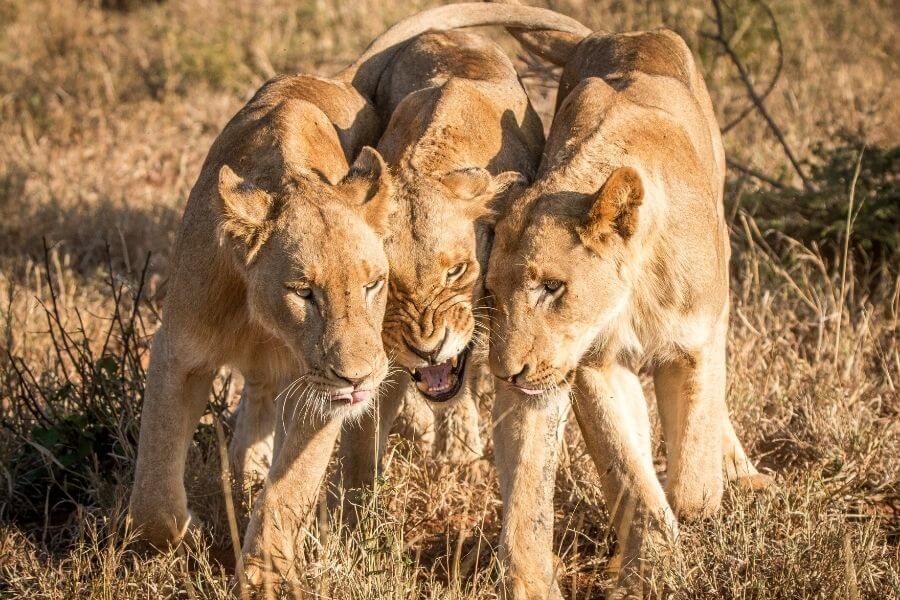
Covering an area of 11,700km, Chobe National Park in Botswana is, without a doubt, one of the best places on earth for spotting wildlife and going on safari. The park is world-famous for having the densest concentration of wildlife in the whole of Africa: with 100,000 elephants plus lions, cheetahs, rhinos, wild dogs, and much more, a visit to Chobe is always an unforgettable and exciting experience.
One of the most unique activities in Chobe is the river safari. This was undoubtedly one of our most memorable experiences: during a three-hour trip down the Chobe River, we saw countless hippos and crocodiles as well as majestic herds of elephants on the river bank.
Where to Stay: Many safari lodges in Chobe now welcome children of all ages and have diversified their traditional programs to create innovative and exciting safari experiences that the whole family can take part in. From animal tracking to learning how to cook a meal out in the bush, these family-focused activities make Chobe National Park the best choice for a family safari. Chobe Game Lodge, for instance, offers a range of family accommodation options for families and their safari packages include entrance fees, game drives, and other experiences.
Camping inside the park is also an unmissable experience. Having dinner in the bush is as al-fresco dining as you could possibly get and then bedding down inside a tent, surrounded by the sound of elephants trumpeting (we could actually see the silhouettes of a huge herd at the edge of our campsite) and hippos grunting is definitely a once-in-a-lifetime experience.
When to Go: The best time to visit Chobe is during the dry season from May to November as this period is the optimum time for animal viewing. June is a particularly good time to visit the park as you avoid the peak tourist months of July-September and the weather isn’t too hot.
Entry Fee: Admission to the park costs 120 BWP (13.20 $) per adult, 60 BWP (5.61 $) per child aged 8 to 17 years.
How to Get There: The best way to get to Chobe National Park is to book a flight from Johannesburg (South Africa) to Kasane Airport, Livingstone Airport (Zambia), or Victoria Falls Airport (Zimbabwe), or a flight from Gaborone (Botswana) to Kaanse and drive to Chobe from there. Kasane is the closest city to the national park.
Expert Tip: We’d recommend combining a visit to Victoria Falls in Zambia with a visit to Chobe as most safari operators offer 1-3 day tours from Livingstone.
Tsingy de Bemaraha National Park, Madagascar
Linn Haglund of Brainy Backpackers
Tsingy de Bemaraha National Park in Western Madagascar is a great destination for families who are up for a unique adventure. The razor-sharp stone forest is possible to maneuver with a guide. There is the Little Tsingy and the Big Tsingy. You should definitely spend two days in the park and do both. Sustainable tourism is important in the park, thus it’s mandatory with a local guide to assure best practices.
Start the first day with a trip through the Manambolo River on a traditional wooden boat, a huge log, probably carved by hand. The Little Tsingy is only about 2-3 hours to walk around. The unique landscape is now accessible to cross thanks to a wooden path and small bridges connecting the stone forest. The guide will teach you all about the history of the Tsingy and the fauna and flora you walk by on the path, which is interesting for the whole family.
On the second day, head to the Big Tsingy. There is a via Ferrata which is very fun for the whole family. The trail takes about 4-5 hours and you walk along the bottom of the 100-meter tall pinnacles before you climb up to the very top for an amazing view. There are a couple of long suspension bridges to cross and cave tunnels to climb through. You might even spot wild lemurs or other wildlife on the trek.
Where to Stay: Morondava is the best place to base yourself to explore Tsingy de Bemaraha. Palissandre Cote Ouest Resort – Spa and Chez Maggie Hotel & Restaurant are some of the properties ranked highly by travelers.
When to Go: The only time you can explore the park is from April to November (dry season) as the park remains inaccessible the rest of the time.
Entry Fee: There is a small entry fee for entering the national park, which was 55000 Ar (14 US dollars) in 2018. Plus the guide fees, which will depend on the guide you choose.
How to Get There: The only way you can get to the national park is by 4×4 from Morondava. You can easily find a driver that will take you while you’re there.
Expert Tip: The easiest, safest, and recommended way to explore Tsingy de Bemaraha with family is to book a tour that includes transfers and accommodation.

Chitwan National Park, Nepal
Dawn of 5 Lost Together
Chitwan National Park is Nepal’s best-known park located along the Nepal-India border. When most people think of Nepal, they think of the Himalayas and trekking through Buddhist villages.
Chitwan National Park offers a completely different side of Nepal with its hot and steamy jungle and exotic wildlife. It is the perfect place for families to enjoy an Asian safari where you can view rhinos, monkeys, elephants, and even tigers in their natural habitats.
The best way to experience the wildlife in Chitwan National Park is on a private jeep tour ($140 USD/vehicle) which can be booked through your hotel or any local travel agency. This is a full-day activity as you need to travel deep within the Park for the best opportunities for wildlife viewing. On our safari, we saw peacocks, monkeys, rhinos, many bird species, and wild boars, and got very lucky and saw an elusive tiger.
It is worth spending a couple of days in Chitwan. In addition to the jeep safari, we recommend watching the sunset over the river from one of the ramshackle bars, participating in elephant bathing, and a visit to a traditional Tharu village. Many visitors participate in elephant rides and visits to the controversial government-run elephant breeding center, but we encourage visitors to avoid these activities.
Our whole family really enjoyed experiencing going on safari and experiencing the lush jungle of Chitwan National Park. Seeing a tiger in the wild truly was a once-in-a-lifetime experience and visiting Chitwan was a great compliment to our time spent in the Himalayas.
Where to Stay: Most visitors base themselves in the sleepy town of Sauraha, although there are also luxury eco-lodges scattered around the Park.
When to Go: February to April is said to be the best time to view wildlife as the hot and dry weather draws the animals out of the forest.
Entry Fee: The admission costs NPR 2000 for a foreigner, NPR 1000 for SAARC members, and NPR 5O for a Nepali.
How to Get There: Chitwan National Park can be reached from the capital, Kathmandu, or the trekking center of Pokhara via a 5-6 hours bumpy bus or private vehicle. However, the more comfortable and fun way to get to Chitwan is by taking a 2-day family-friendly white-water rafting trip from Pokhara along the Seti River with Paddle Nepal.
Expert Tip: Follow the instructions given by your wildlife guide!

Jim Corbett National Park, India
Editor’s Pick
Jim Corbett National Park is the oldest national park (since 1936) in India. Previously known as Hailey National Park, the park was renamed Jim Corbett in about 1955 to accolade Edward James Corbett (Jim Corbett), an India-born British-Irish naturalist.
The national park is, undoubtedly, one of the best places to visit in India for wildlife and nature lovers. Corbett Tiger Reserve was selected as a location for launching the Project Tiger initiative, a well-known wildlife conservation project. The reserve houses the highest number of Royal Bengal Tigers meaning higher chances of tiger sightings. Apart from, but obvious, tigers, you can witness animals like leopards, spotted deer, sambar, otter, Himalayan black bear, Indian gazelle, and many others. Jim Corbett also houses quite a few varieties of reptiles, amphibians, migratory and local birds.
Out of five different zones in Jim Corbett (Dhikala, Bijrani, Jhirna, Dhela, and Durgadevi), Dhikala, Dhela, and Bijrani are the best zones for tiger sightings. Sitabani Buffer Zone, a forest reserve zone, is well-known for its thick forest, glassy streams, and ancient temples, though outside the Corbett Tiger Reserve, is open to the visitors of the national park.
A visit to the Jim Corbett is incomplete without Safari in Corbett. Elephant Safari, Canter Safari, and Jeep Safari are offered inside the national park. Elephant Safari is a fun activity for kids though the chances of seeing tigers are dim here. Jeep Safaris are your best bet if tiger sighting is your goal as they take you to the otherwise inaccessible areas and zones of the reserve.
Apart from incredible wildlife – trekking, mountain biking, bird-watching, nature walking, fishing, river rafting, and a lot more adventure activities await you at Jim Corbett. Just about a 45-minute drive from Corbett to Kaladhungi, Corbett Museum is worth a visit, especially with kids. The ex-abode of Jim Corbett, a legendary hunter, the museum now showcases his chattels as well as fascinating information about Jim Corbett’s flora and fauna.
Where to Stay: There are many options to stay in and around the national park. Each zone of Jim Corbett has boarding and lodging facilities. You can choose to stay in one of the forest lodges or rest houses inside the reserve. If wildlife viewing and photography are your goals, you must choose to stay inside the park as it gives you to get enough amount of time in the reserve.
Please be informed that you need to stay inside the Dhikala zone to enjoy a jeep safari of Dhikala zone. There are many government-run and private camping options available inside the park for people who love to stay amid the wilderness and nature. For travelers who prefer luxury and comfort over camping need not get disheartened as there are some awesome luxury resorts around the national park. Book the best ones here– Jim’s Jungle Retreat, Aahana Resort, and Rangers Reserve.
Book Hotels in Jim Corbett National Park
When to Go: November to February is when all the zones are open, the weather is pleasant, and safaris are enjoyable at Jim Corbett.
Entry Fee: Click here to know how much admission to Corbett Tiger Reserve costs.
How to Get There: Located in Ramnagar in Uttrakhand, Jim Corbett is a little over 5 hours drive away from Delhi.
Expert Tip: If you plan to stay inside the park, make sure to book well in advance. As per Jim Corbett National Park’s website, the suggested time frames for advance booking are 46 days for Indians and SAARC visitors and 91 days for foreigners. Also, you should book accommodation near the reserve to minimize your travel time.

Related Read: Best National Parks in India
Kanha National Park, India
Mariellen Ward of Breathedreamgo.com
If you want to see a tiger in India, Kanha National Park is your best bet. It’s considered to be the most well-managed tiger reserve in India, and an absolutely beautiful park teeming with birds, wildlife, and a vast array of flora and fauna. There is so much to see and do in Kanha, and so many amenities available, it’s ideal for families, too.
Where to Stay: Near the two main gates of Kanha National Park, Khatia / Kisli, and Mukki, there is a cluster of hotels, resorts, and lodges. The best ones are, further from these commercial centers, and my absolute favorite is Kanha Earth Lodge. The lodge is a 20-minute drive from the main gate, Khatia / Kisli, and is surrounded only by open countryside and a few small villages.
Aside from jeep safaris into the park twice a day (morning and evening), the lodge can arrange other activities, such as nature walks with a naturalist, a bike ride through the local villages, a visit to a local market, and a picnic at sunset point. The lodge also has a swimming pool and offers talks and documentaries each evening before dinner — so there’s a lot to do for the entire family.
When to Go: The park opens on October 1 and closes for monsoon on June 30 each year. The best time to see a tiger is in the spring – March, and April when it’s hot and they are drawn to waterholes.
Entry Fee: The Kanha National Park Safari (Entrance Ticket + Guide Fee + Jeep Rent + Service Charge) costs 6500 for Indians and 9500 for foreigners.
How to Get There: Kanha is located in the state of Madhya Pradesh, which is in the middle of India and is often called the heart of India. It’s a remote area and you do have to make an effort to get there. There are three airports you can fly into Bhopal, Jabalpur, and Raipur and then it’s a four- to six-hour car drive.
Expert Tip: Book well in advance. You should ideally book a safari first and then an accommodation to make sure that the place you stay is near to the zone or gate you’ve booked the safari from.

Read more: India itinerary ideas for spending 1 to 4 weeks
Yala National Park, Sri Lanka
Sasha from Mog and Dog Travels
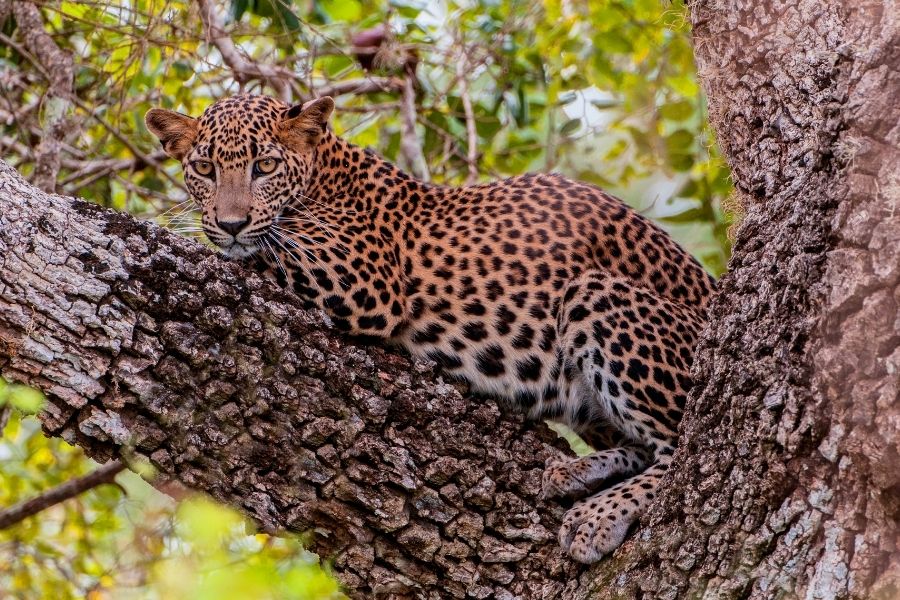
Sri Lanka’s most popular national park, Yala was classified as a wildlife sanctuary in 1990 and is famous for having the highest population density of leopards in the world. Basically, there are leopards everywhere you look. (Okay, I am kidding slightly here, but if seeing leopards is on your bucket list, this really is the best place).
However, Yala National Park isn’t just all about leopards: it is also home to elephants, sloth bears, buffaloes, and myriad species of birds. It’s also a stunningly beautiful and ecologically diverse place – we had previously only been on safari in landlocked countries such as Zambia and Botswana, so it was really interesting to visit a park that had forests, lagoons, scrublands, and a picture-perfect sandy beach!
Where to Stay: There are many luxurious accommodation options around Yala, but honestly, we were quite happy with saving some cash and staying at the lovely Lake Edge Holiday Inn in the nearby town of Tissamaharama. All safari companies will organize pick-ups from your hotel so you don’t have to stay right near the national park.
When to Go: It can be visited all year round, but it’s much easier to spot animals during the drier months from May-August.
Entry Fee: The ticket price is $15 per adult and $8 per child.
Most people visit Yala on a safari tour (given that there are so many leopards about, walking isn’t really an option) and one of the best things about the park is its affordability, especially for family groups. A half-day safari costs around $36 per person, including entrance fees to the park (which change frequently and are between $19 – $22). This is extremely reasonable given that a safari experience in Africa frequently tops $100 per person or more. Half-day tours are also better for younger children – a full day of bumping along dusty roads might end up being a little too much!
How to Get There: Yala is around 6 hours drive from Colombo.
Expert Tip: To get the most out of your experience, we would recommend visiting the park more than once as this will increase your chances of spotting the very elusive leopard. We went on a shorter evening safari, a full day trip, and a special leopard spotting safari (that began at dawn) and we saw different animals each time. Plus we saw leopards every day!
Read More: 8-Day Sri Lanka Itinerary
Khao Sok National Park, Thailand
Martina & Jürgen of PlacesofJuma
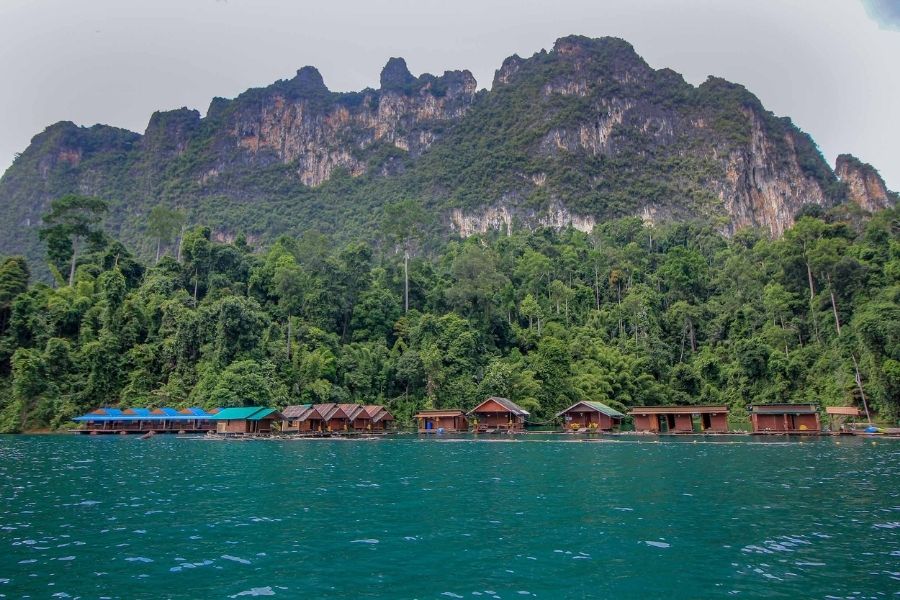
One of the most beautiful national parks, which you can also visit with the whole family, is the Khao Sok National Park in Thailand. This natural jewel is especially famous for its intact nature, the deep jungle, and as a highlight the Cheow Lan Lake with its mighty limestone rocks. Children are enthusiastic about the huge excursion program in nature, and starting with boat trips, waterfall hikes, animal watching, and helping the elephants, everything is offered here. Also, a night safari is a great thing, which will remain in the memory of the little ones.
Where to Stay: At the edge of the national park, there are accommodations in every price range. From backpacker hostels to small hotels with a pool, everything is available. For a very special experience, it is best to stay overnight in one of the floating bungalows. These unique accommodations swim directly at the lake and make your stay really special. Recommendable here is for example the Panvaree Resort or the more luxurious Panvaree the Greenery.
When to Go: Owing to the tropical weather of Khao Sok, we recommend a visit around the dry months from December to April.
Entrance Fee: The entrance fee to the national park is not too expensive and currently costs 300 Baht (around 9 Euros).
How to Get There: The journey to the park is relatively uncomplicated. The Khao Sok National Park is located about 800 kilometers south of Bangkok but can be easily reached by train & bus, or by plane & bus. Especially children find the journey by night train exciting! Also, those who spend their beach vacations in the region Khao Lak can easily reach this park by a day or 2-day trip with an overnight stay.
Expert Tip: As a small insider tip, we can recommend a visit to the Monkey Temple. Proper shoes, sun protection, and mosquito protection are recommended.
Cat Ba National Park, Vietnam
Emily of Wander-Lush
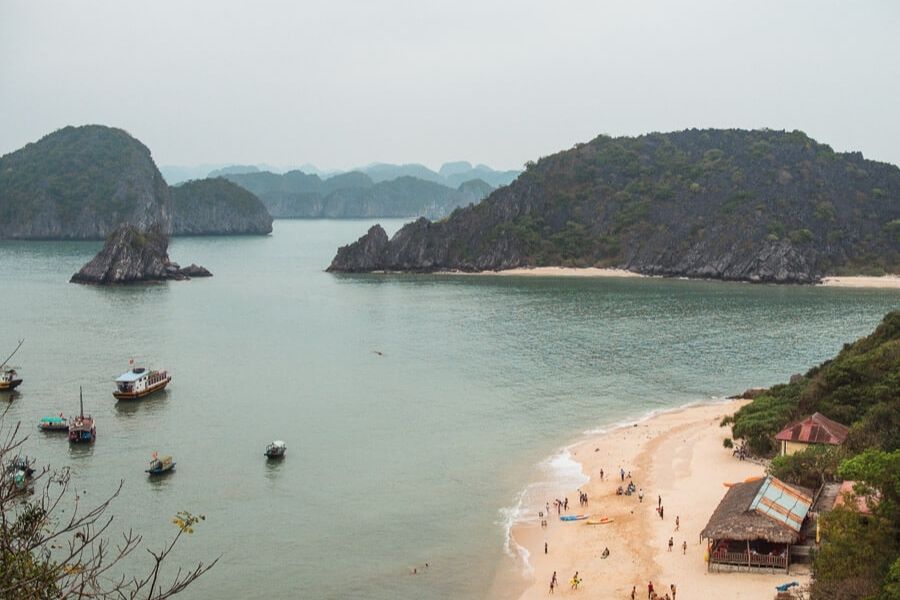
Cat Ba, one of Vietnam’s most popular national parks, offers a great mix of nature, culture, and war history to keep kids (and adults) entertained.
The park comprises the lush interior of Cat Ba Island, the largest in the limestone archipelago off Northern Vietnam’s coast that makes up Ha Long and Bai Tu Long Bay.
Cat Ba National Park is a UNESCO World Heritage Site recognized for its biodiversity. More than 32 species of mammal dwell in the jungle, including the critically endangered golden-headed langur, which has become the island’s emblem. For a chance to see wildlife – which also includes deer, civets, and macaques – hire a local guide to walk one of the many trails, or head out in the evening for a special wildlife-spotting expedition by torchlight.
Another highlight is the easy day hike to Viet Hai village, where you can learn about Vietnam’s ethnic minority communities. Hire a bicycle to explore the village and spend the night at a local homestay.
Since Cat Ba National Park stretches all the way to the coast, you can also enjoy the island’s beaches and a range of water activities, including boat, rides out on Bai Tu Long Bay, kayaking, and stand-up paddleboarding.
The park is full of caves and grottoes, some of which were used during the Vietnam-America War to store munitions. Kids will love ‘Hospital Cave’, which was used to treat wounded soldiers.
Where to Stay: Cat Ba Eco-Lodge, a family-friendly hotel inside the park, offers an outdoor pool and on-site restaurant.
When to Go: The months of October and November are perfect to explore Cat Ba.
Entry Fee: Entrance to Cat Ba National Park is an affordable 80,000 VND ($3.45 US) for adults and 60,000 VND ($2.60) for kids.
How to Get There: It’s very easy to reach Cat Ba from Hanoi by bus and ferry. Combined tickets can be purchased in advance, and the journey takes under 3 hours.
Expert Tip: To avoid the crowds, visit Cat Ba in spring or autumn. Winter in Northern Vietnam is chilly, and summer is the peak season for domestic tourists.
Related Read: 10-Day Vietnam Itinerary
Iguazú National Park, Argentina
Sinead from Map Made Memories
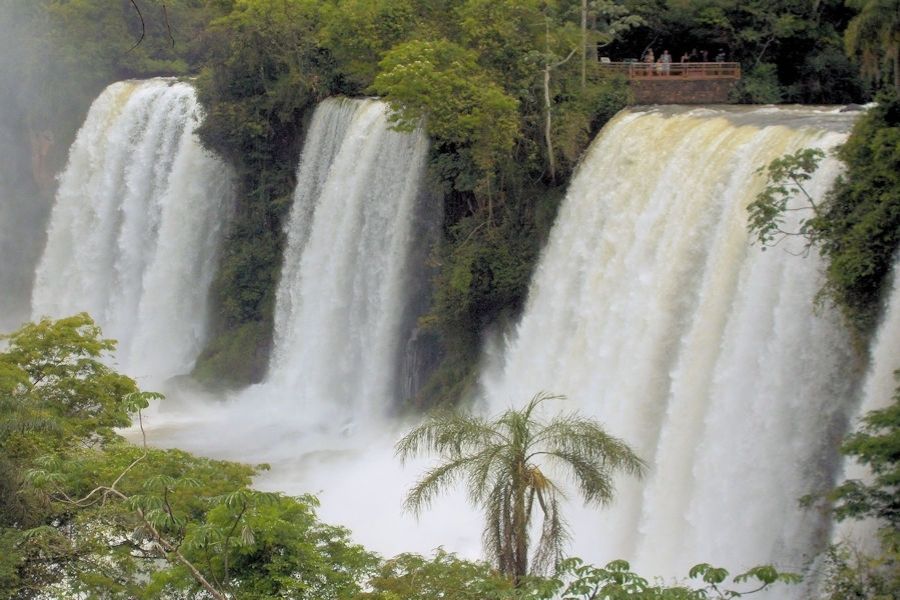
A visit to Iguazu Falls National Park is, or should be, on every traveler’s bucket list! The expansive UNESCO World Heritage park straddles the border between Argentina and Brazil and is truly an unmissable location. Iguazu Falls consist of between 200 and 300 plunging waterfalls (depending on the time of year) along a 3-kilometer stretch of the Iguazu River, including the deafening Garganta Del Diablo or The Devil’s Throat waterfall.
What makes this park ideal for traveling families is the accessibility to the unforgettable falls. On both sides of the park, paved and wooden walkways wind past, over, and around the spectacular falls.
In places, visitors will get wet but that only adds to the thrilling experience. Children are able to spot a variety of wildlife including toucans, giant millipedes, monkeys, lizards, countless tropical butterflies, and inquisitive coatis in addition to the incredible flora on offer.
Little legs are supported by road trains and shuttles to different parts of the park whereas keen hikers are spoilt for choice as to which walk to choose.
Where to Stay: On the Argentinian side, the lively town of Puerto Iguazu marks a great base for your trip with a range of accommodation options to suit every budget.
When to Go: Iguazu Falls National Park is impressive at any time of year and is well worth the $26 entrance fee.
Entry Fee: AR$26
How to Get There: The park is easily reached by car or public bus on both sides of the border – Argentina and Brazil.
Expert Tip: I would highly recommend devoting at least two days to explore the park; each side of the park is very different and deserves at least a day of your time.
Parque Nacional Los Glaciares, Argentina
James Ian at Travel Collecting
Parque Nacional Los Glaciares, Argentina is a wonderful destination for families. There are two main entry points into the park. The first is El Calafate, where there is an airport with several flights a day from Buenos Aires. From El Calafate, it is easy to visit Perito Moreno Glacier, one of the most active, advancing glaciers in the world.
There are a series of wooden walkways across from the face of the glacier. The whole family will love sitting and listening to the frequent crackles of the glacier shifting and the occasional extra loud crack that signal a piece of the glacier’s wall is falling off.
It’s a fun challenge for kids and adults alike to try to find where the noise came from in time to see whole sections of the glacier tumbling with an enormous splash into the water.
Another way to enjoy the national park is on a cruise on a catamaran to Upsala and Spegazzini Glaciers.
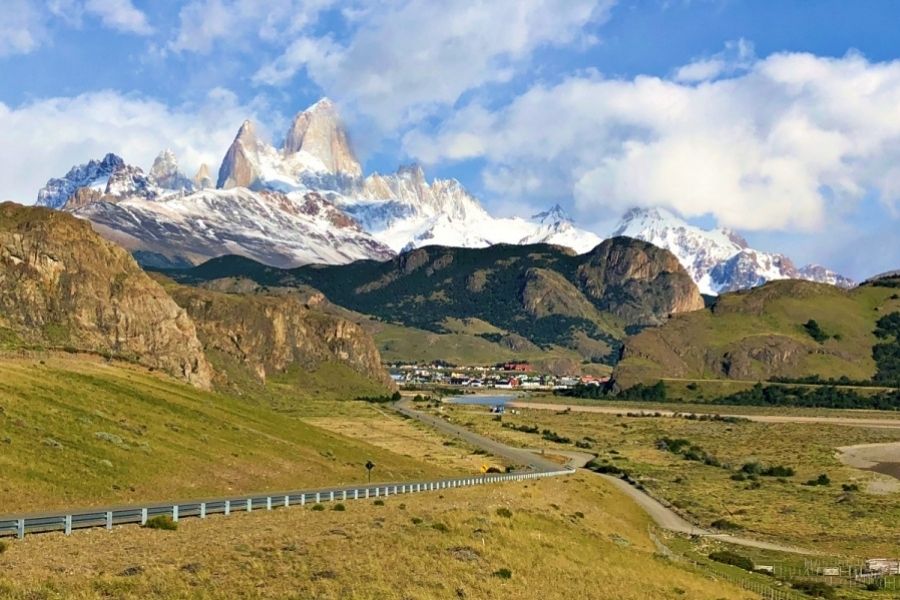
El Chalten, a four-hour drive north of El Calafate, is the second main access point to the national park. This small town is billed as the Hiking Capital of the World for a reason.
The two main hikes are Laguna Torre at the base of Cerro Torre and Mount Fitzroy. Both are long hikes – a bit too long for young children, but fun for older kids with a sense of adventure. However, younger kids can still make it to Lookouts a short distance along the trails with stunning views of the dramatic mountain peaks.
Where to Stay: Nothofagus Bed & Breakfast is a lovely place to stay.
When to Go: The best time to go is southern late spring and summer, approximately November – March.
Entry Fee: The park entrance fee in El Calafate is $ 800 pesos. There is no admission fee to the park in El Chalten.
How to Get There: There are regular flights to El Calafate International Airport from major cities in Argentina like Buenos Aires, Córdoba, Bariloche, Ushuaia, and others. The park is about 49 km (by road) away from El Calafate.
Expert Tip: My top tip is to give yourself a few extra days. The views are jaw-dropping, but the peaks can be covered in clouds and it would be a shame to go all that way and miss the views. So, allow a few extra days in case you have some overcast days.
You Might Like: Best Road Trips in the World
Cotopaxi National Park, Ecuador
Deb from The Visa Project
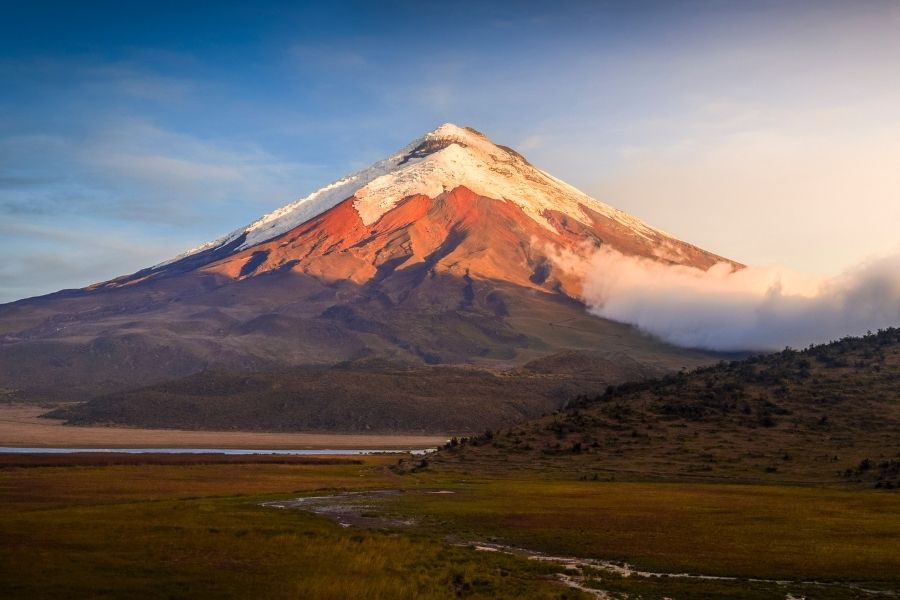
With beautiful green landscapes, a great variety of wildlife, and the world-famous active Cotopaxi Volcano with a picture-perfect snow cap, Cotopaxi national park is often one of the highlights of any family trip to Ecuador. If you are visiting Ecuador, this is one place you should never miss.
If you are traveling with kids, mountain biking is a must. There are many great trails that would take you through patches of native forests and farmland, and around lakes. You can take your own bikes or rent them from a tour company.
One of the most popular hikes to do as a family is the one that takes you to fantastic remains of native forests, glacial rivers, petrified lava streams, and waterfalls in the Santa Rita Ecological Reserve. You also might be able to catch some rainbow trout in the streams and have a picnic at the campsite.
You can also ride horses toward the stunning three-peaked Ruminahui Volcano. Hiking to Cotopaxi volcano is physically challenging, but if you are a family of die-hard hikers, give it a try.
Where to Stay: You can stay in Hacienda Hato Verde, a beautiful hotel and working dairy farm near the park.
When to Go: The dry season between June and October is the best time to visit Cotopaxi.
Entry Fee: Admission to the park costs $10 per day.
How to Get There: Driving from Quito to Cotopaxi takes about 2 hours. You can also take a public bus from the Quitumbe bus terminal in Quito to Latacunga or Ambato, for $3. Get off at the bridge on the Panamerican-HighWay from where you will need to take a local taxi, for $15.
Expert Tip: Do not forget to take hiking shoes, sunscreen, and warm clothes with you.
Torres del Paine National Park, Chile
The largest and most-visited national park in Chile, Torres del Paine is famous for its remote wilderness. Located on Chilean Patagonia, the park is declared the eighth wonder of the world and a Biosphere Reserve by UNESCO (as quoted on the official website of the Torres del Paine) and is acknowledged as one of the most beautiful places on Earth. Do you need more reasons to visit Torres del Paine?
The unique landscapes (from fjords, rivers, lakes, icebergs, golden pampas, lengas forests, to mind-boggling hiking trails), geologic formations, diverse flora, and fauna (from guanacos, pumas, rheas, to condor), incredible history (from its indigenous tribe, Chilean cowboys, to the park’s very first visitor – Lady Florence Dixie) – Torres del Paine National Park is ought to be one of the most extraordinary experiences of your life!
The most iconic and exquisite feature of the park remains the 3 granite peaks (Cuernos del Paine or ‘Paine horns) and they, of course, gave the name to the national park.
Book a day trip to Torres del Paine from El Calafate
Home to some of the best treks in South America, the park features one of the best hikes in the world – the “W” trek. Adults can join a guided hiking tour of W-Trail to enjoy the picture-perfect views of icy blue glaciers and lagoons.
Book the guided hiking tour of W-Trail here.
As for kids, Salto Grande, Mirador de Cuernos, Lago Grey, and Fauna Trail are the best hikes.
Where to Stay: Explore Patagonia | Patagonia Camp
When to Go: Torres del Paine is incredibly beautiful no matter what time of the year. Summer is the peak season here but we recommend visiting during autumn (March, April, and May) when fall foliage adds to the beauty of the park. Plus, there are higher chances of seeing wildlife during fall.
Entry Fee: The admission fee differs for residents and foreigners and depends upon the season. Click here for the entry fee details.
How to Get There: Punta Arenas is the closest city with an airport to Torres del Paine from where you can continue your journey by bus or rental car to Puerto Natales. Route 9 connects Puerto Natales to the Sarmiento entrance and Laguna Amarga entrance while Route Y-290 connects Puerto Natales to the Serrano entrance of the park.
Expert Tip: Give yourself ample time, at least 3 to 4 days, and divide the park into zones to explore it with ease. After all, you’re visiting one of the most beautiful places on Earth!

Tikal National Park, Guatemala
Melissa from Parenthood and Passports
Tikal National Park, hidden in the jungles of eastern Guatemala, is a phenomenal national park and UNESCO World Heritage site. Covering more than 222 square miles, this expansive, ancient Mayan city is not only an important archaeological site, it is also a great place to teach children about Mayan history and the original settlers of Central America. If visiting Guatemala with kids, Tikal is an attraction you won’t want to miss.
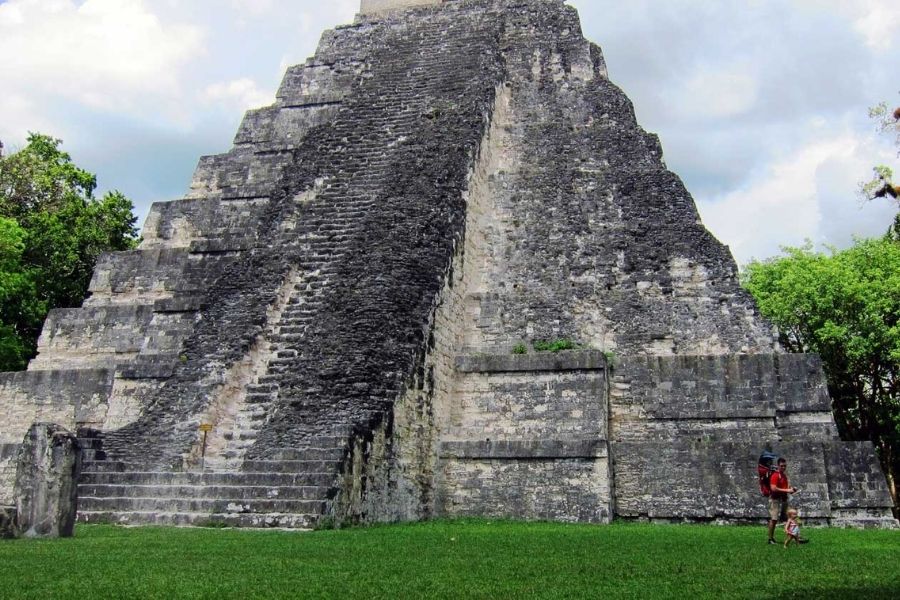
The central portion of Tikal is where you’ll find the most impressive ruins. There are 6 main temples within the national park, although it is believed that there are many more that remain unexcavated. In fact, it is estimated that only 30% of the ancient city of Tikal is currently unearthed.
Temple I and Temple II are located in the Great Plaza, one of the most photographed areas of the park. The two pyramids, which face each other, are the acropolises of the Mayan ruler Jasaw Chan K’awiil I and his wife. It’s a great area of the park for kids to explore freely. You can even climb the stairs on the back of one of the temples for a bird’s eye view of the plaza and several of the other temples.
When to Go: November to April
Entry Fee: 150 quetzals ($20 USD) per adult. Admission is free for kids under 12.
How to Get There: Tikal is located in the state of El Peten, approximately a 2-hour drive from the Guatemala-Belize border. For this reason, many people will visit Tikal as a day trip from San Ignacio, Belize.
Book a day trip to Tikal from Flores
Where to stay: For those who want to spend more time in the park, or take a sunrise tour of Tikal, there are several budget-friendly lodging options within the park, including Jungle Lodge and Hotel Tikal Inn.
Expert Tip: Tikal is a very large park and visiting it requires a lot of walking. Be sure to wear comfortable walking shoes, and bring plenty of bottled water and sunscreen.
Kakadu National Park, Australia
Located in Australia’s Northern Territory, Kakadu National Park is the largest national park in Australia and is recognized as a UNESCO World Heritage site. From wetlands to rainforests to rugged cliffs to gushing waterfalls to exotic wildlife to prehistoric rocks to whatnot – the park delights its old as well as young visitors with mind-boggling diversity.
There’s no dearth of things that you can see and do here. Take a cruise on Yellow Water Billabong to spot the exotic wildlife from crocodiles, and flatback turtles, to migratory birds or enjoy the views from the sandstone escarpments or take a relaxing dip in Gunlom Plunge Pool or climb it to enjoy the sweeping vistas over the park, or board the boat shuttle to admire the gorgeous Twin Falls or book a scenic flight to ooh-aah at the sight of Kakadu from above or learn about park’s aboriginal heritage (Kakadu was home to Bininj/Mungguy people) by visiting rock art sites like Nourlangie, Nanguluwur, and Ubirr or witness the sunset from Nourlangie Rock Viewpoint or just breathe in the pure air and vitamin N – there’s no dearth of things that you can see and do here.
The park is open all year round though some parts remain inaccessible during the tropical summer.
Where to Stay: There are four main areas within the park with umpteen accommodation options from hotels, and cabins to campsites. Cooinda Lodge and Hawk Dreaming Wilderness Lodge, both offer an extra special experience.
When to Go: The dry months of June and August are perfect for exploring Kakadu National Park.
Entry Fee: The prices of the park pass vary depending on the season, with lower prices (adult pass: $25/child pass: $12.50/family pass: $65) during the tropical summer from November to May and higher prices (adult pass: $40/child pass: $20/family pass: $100) during the dry season from May to October. Park passes are free for residents of the Northern Territory. Your park pass includes free ranger-guided walks, talks, and other cultural activities.
How to Get There: Kakadu is just about a 3-hour drive away from Darwin. You can also opt for a day trip to Kakadu from Darwin.
Book a day trip from Darwin including the cruise
Expert Tip: The best time to enjoy the wildlife is around sunrise or sunset. And, don’t forget to carry binoculars!

Read More: Best National Parks in Australia
Mount Cook National Park, New Zealand
Jennifer Parkes from Backyard Travel Family
Mt Cook National Park is located in the middle of the South Island in New Zealand. It is home to New Zealand’s highest mountain, Mt Cook, and whatever you do in the region, you must take on one of the most beautiful Mt Cook walks.
The Hooker Valley Track is one of the most popular tracks in the park as it is an easy three-hour, flat walk, to a stunning viewpoint of Mt Cook. In winter you may be lucky enough to see the lake freeze which is beautiful. There are three incredible swing bridges too, a favorite with kids and the young at heart.
For those who are adventurous, fit, and have older children, Mueller Hut is an epic 4-hour hike. You will climb up 2000 stairs to find an iconic red hut, perched on top of the mountains, overlooking Mt Cook, the glaciers, and the incredible Mackenzie Region. You can stay overnight in the hut and experience some of the best stargazing in the world. Other awesome things to do are to book a scenic flight, a guided hike on the Tasman Glacier, or even a skydive from 15000 ft.
Where to Stay: Campers and Motorhomers will love the very cheap DOC campsite at White Horse Hill Campground, but if a bit of luxe is more your thing, then the Hermitage Hotel will have you well covered.
When to Go: Any time of the year is perfect to visit Mt Cook. Winter (December to February) is the peak season. Autumn (March to May) brings beautiful fall colors while Spring (September to November) brings sunshine.
Entry Fee: Unlike many national parks around the world, it does not cost anything to access Mt Cook National Park, nor any other National Park around New Zealand.
How to Get There: To get the most out of Mt Cook National Park, I recommend you hire a car. It is an easy three-hour drive from both Queenstown and Christchurch International Airport, and the views are stunning. The last 45 minutes will see you driving around the glistening glacial blue Lake Pukaki with stunning views of Aoraki/Mt Cook itself.
Book a guided tour to Mt Cook and Tasman Glacier from Queenstown or take a Day trip to Mt Cook from Christchurch
Expert Tip: Always add an extra day to your itinerary as Mt Cook often likes to hide behind the clouds, and alpine weather is volatile. Give yourself the most amount of time to explore as you can.

Peak District, UK
Jenny from Peak District Kids
One of the best national parks in the UK, Peak District is the oldest National Park in the UK. With its gently rolling hills, family-friendly local pubs, and a handful of family attractions, it’s a fantastic destination for those with young kids especially.
Some of our favorite short Peak District walks for kids are Padley Gorge, Stanton Moor, or Lathkill Dale. If you want to get on your bikes, head to one of the many traffic-free Peak District cycle routes that have been transformed from old railway lines.
The Monsal Trail cycle path starts from Bakewell, and it’s not too far from Chatsworth Estate, which is one of the grandest estates in the UK.
Where to Stay: The picturesque town of Bakewell is a good place to base yourself, famous for Bakewell Puddings. The Rutland Arms Hotel and the H Boutique Hotel are great choices for families.
When to Go: Whilst summer is a very popular time to visit the Peak District, Autumn is my favorite time of year as the colors of the landscape change and the throngs of tourists have dissipated.
Do be warned that the weather in the Peak District can be rather unpredictable, and a rainy day is not uncommon. When it is wet outside, the best thing to do in the Peak District is to venture underground to one of the many show caverns. The limestone caverns around Buxton and Castleton are some of the most impressive in the country. Alternatively, take the cable car from Matlock Bath up to The Heights of Abraham to visit the old mining caves.
Entry Fee: The National Park was founded on the ethos that the countryside should be accessible to all, so there is no entrance fee, and the abundance of footpaths and cycle tracks are all free to explore.
How to Get There: Public transport is VERY limited here and whilst there is the odd bus from Derby, or you could take the train from Sheffield or Manchester to Edale, a car is very much advised as the transport network is so limited.
Book a day trip to Derbyshire and Peak District from Manchester
Expert Tip: Our top tip for visiting the Peak District with kids is to make sure you all have the right clothing. Layers are best for the interchangeable weather, and good kids’ hiking boots will help those little legs walk that little bit further.

Read More: Best Places to Visit in the UK with Kids
What’s your favorite out of all the national parks in the world? Is it included in the list? No! Is it worthy to be on our list? Yes! What are you waiting for then? Comment below and we’ll add it to our list of best national parks in the world!
Save the Guide to the Best National Parks in the World to Pinterest

Oh my gosh, so many drool-worthy parks!! There’s something so magical and unique about Goreme park in Turkey. Need to visit someday! Thanks for such a thorough list!
I’ve been to a couple of these, and would love to check off the rest as well! Ha! What a beautiful place this world is!
Thanks for stopping by. Yes I know, there are so many fascinating parks around the world worth visiting. Hope to visit them all someday.
I’ve been to many national parks in the US (including the ones listed here), but I have so many more national parks to visit worldwide! You’ve done a phenomenal job of rounding up places I’d absolutely love to bring my kids. Pinning to my bucket list board!
Thanks a lot for reading and appreciating it. Exactly I even have added a lot to my bucket-list. I really want to take my kids to explore these fascinating places around the world.