
India is a land of festivals. With so many religions, ethnicities, and communities, we literally, figuratively, virtually, and practically celebrate almost every day of the year. There are more festivals celebrated in India than anywhere else in the world. We don’t need a reason or season to celebrate, you see. Indians celebrate religion, culture, traditions, and life @ large like no other. So, you must witness the festivals of India to learn about its soul and shades.
Why must you attend Indian festivals?
There’s no better way to learn about the culture and traditions of a particular state than to attend festivals in that state (India has 28 states and 8 Union Territories). Festivals also provide a sneak peek into the diversity and variations with which the same festival is celebrated across different states. Festivals are also the best time to feast on scrumptious delicacies. People dress up in their colorful, traditional costumes.
Read Next: 33 Exciting Celebrations and Festivals Around the World
15 Best Festivals in India
Holi
Attended by Debjani of The Vagabong
When: Wednesday, 4 March 2026
Where: All over India, but the festival is at its best in Northern India
Age group: Holi is meant for everyone. It’s a festival of colors, especially for young ones who love playing with them.
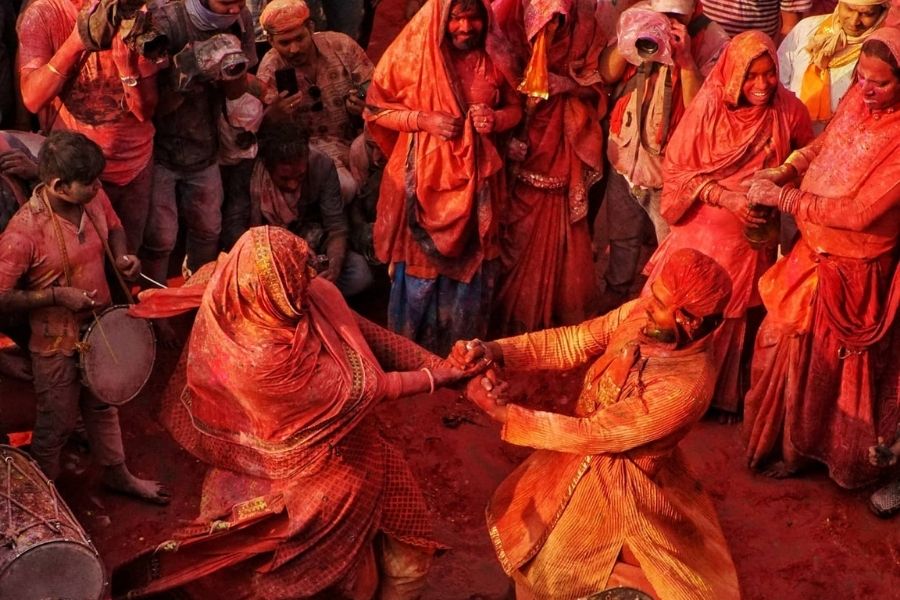
About: Holi is one of the major festivals celebrated all across India at the onset of spring. It is usually a big affair in the northern parts of India, mainly in Uttar Pradesh, Haryana, Rajasthan, and Punjab, and attending this colorful festival is on the bucket list for travelers from around the world. It is a major Hindu Festival associated with several mythological stories.
One of them is King Hiranyakashyap, who was an atheist. He couldn’t tolerate the fact that his son Prahlada was a devout devotee of Lord Narayana. To stop his son, he approached his sister Holika, who had a boon that whoever she took in her lap would be burned to death. Legend has it that Holika took young Prahlada in her lap to burn him, but instead of him getting burnt, she, herself, was immolated.
This is why the rituals of Holika Dahan take place a day before Holi. People light a bonfire while chanting prayers.
Another popular tale usually associated with Holi is the Raas Leela of Lord Krishna with Radha Ji in the holy land of Mathura and Vrindavan. According to folklore, the entire love tryst between them was known as Raas-Leela, during which Krishna playfully put on colors for Radha and teased the Gopis through a divine dance. So, Holi is played on a large scale in and around Uttar Pradesh over a span of seven days.
In Bengal, Holi is celebrated one day before the main festival and is popularly known as “Dol” or Basanta Utsav. It marks the onset of springtime as people rejoice to the tune of Rabindra sangeet while playing with colors, mainly made of natural ingredients like the Palash flower, which blooms only during springtime. One must come and visit Shantiniketan, where people from all around the world flock to witness the grand celebration.
Expert Tip: If you want to witness the best Holi in India, head to Vrindavan and Mathura. The cities are 15 km apart.
Diwali
Attended by Amishi

When: Sunday, 8 November 2026
Where: All over India
Age Group: Diwali is a festival for all to enjoy; kids of all ages are welcome.
Diwali is about how the villagers of Ayodhya lit mud lamps (diyas) so that Lord Ram, Lord Lakshman, and Goddess Sita could find their way home after a 14-year exile in the forest. It is celebrated every year in November on a no-moon night. People light diyas and lights, make beautiful rangolis with dazzling patterns, and light firecrackers, which is the most fun part! We pray to Lord Ganesha and Goddess Lakshmi for happiness and wealth.
Diwali is a festival worth attending! First and foremost, it is about spending time with your family! This festival has immense religious significance. It is a story from one of the holiest books of Hinduism, The Ramayana. It tells us the most about India’s culture. It should also earn a visit because of the endless fun, colorful rangolis, lighting firecrackers, and, of course, delicious laddoos!
Update: It brings me Immense joy to share that Diwali has now been recognised by UNESCO as part of the world’s Intangible Cultural Heritage, a moment that feels deeply affirming for a festival so rooted in light, togetherness, and tradition.
Dussehra
Attended by Sundeep and Bedabrata of Delhi-Fun-Dos.com

When: Like most Indian festivals, Dussehra falls on different dates every year. In the year 2026, Dussehra will be celebrated on Tuesday, 20 October.
Where: Dussehra is celebrated all over India.
Age group: There is no age bar for celebrating Dussehra, so yes, kids are allowed. Given that it is primarily a late-evening autumn festival, any child aged five or older should be comfortable.
The origin of the Hindu festival Dussehra can be traced to the great Indian epic, the Ramayana. On Dussehra, the virtuous Lord Rama killed the tyrant demon king Ravana. To commemorate this event, Dussehra is celebrated all across India to mark the victory of good over evil.
Dussehra festival practices vary in different parts of India. In North India, Dussehra is preceded by Navratri, a fortnight of worship and fasting. The strict observance ends one day before Dussehra, and people are in a celebratory mood on this day. Grand public celebrations of the Ramlila (Glory of Rama) are organized in neighborhood parks. Giant effigies of Ravana, his brother Kumbhkarna, and his son Meghnada are erected at these sites.
The evening program begins with plays that enact key episodes of the Ramayana. The performances culminate with the burning of the effigies above. These effigies, now giant torches, set the night autumn sky on fire. Fireworks also add to the show, and people from across the globe gather in various parts of India to watch this gorgeous sight. If you are visiting India for Dussehra and attending a Ramlila, a befitting end would be having tangy, crunchy balls called golgappe, followed by jalebi, a very popular Indian sweet.
Expert Tip: Head to Kullu, Delhi, or Mysore to witness the best Dussehra in India.
Read More: 18 Best Art and Music Festivals in the World
Navratri
Attended by Mayuri Patel from Fernwerahee

When: Sunday, 11 October 2026 to Monday, 19 October 2026
Where: All over India, but the festival is more colorful in Maharashtra and Gujarat
Age group: Kids allowed from 5 years and above
Navratri is celebrated in Gujarat by fasting and worshipping Goddess Durga for nine days. The Gujarati calendar determines the festival dates. The last day is known as ‘Dussehra,’ which is considered the victory of good over evil. People play ‘Garba’ for 9 days during this festival, and it is regarded as India’s most famous festival.
India’s festivals are known for their colors, chaos, and enthusiasm. Garba is played around the idol of Goddess Durga, and people dance to the beats of folk songs with complete confidence. Navratri and Garba are celebrated with great joy by people of all ages, including children, young people, adults, and the elderly.
The colors, crowds, and melodious songs will definitely inspire you to witness Navratri, one of the most fascinating festivals in India.
Expert Tip: Navratri of ‘United Way of Baroda’ is the most famous, and more than 70,000 people twirl in a circle to play the Garba.
Durgapuja
Attended by Subhadeep Mondal of My Travel Frames

When: Saturday, 17 October 2026 to Wednesday, 21 October 2026
Where: All over India, though, the festival is more spirited and lively in West Bengal, Assam, Odisha, Tripura, Jharkhand, and Bihar.
Age group: This is for all age groups, including kids who enjoy it most.
Durgapuja is the biggest festival in the Bengali community. According to Hindu scriptures, this festival marks the victory of Goddess Durga over Asuras (Mahisasura). Essentially, it signifies the power of good over evil. This festival is a 10-day event, with the last five days as the main attraction, when customs and rituals are practiced.
Although the actual festival begins with Mahalaya, when Hindus perform Tarpana in honor of their dead ancestors, preparations start several months earlier with Khuti puja. A rigorous process of idol-making follows the planning or conceptualization of the event, the part-by-part construction of a puja pandal, the artistic decoration of the pandal’s interior and exterior, and the installation of colorful lights. All of these involve a large workforce for the 2-3 months preceding the festival.
Durgapuja is an emotion for Bengalis. It builds an aura of connection, friendship, and reunion, often beyond all social, religious, and political boundaries. It unites people and has a tremendous socio-economic impact. Every year, nearly 5,000 puja pandals are made in Kolkata alone, the capital of West Bengal. You will not find another event or festival in the world that happens on a larger scale than Durgapuja.
Ganesh Chaturthi

When: Monday, 14 September 2026. It falls on the fourth day (Chaturthi) of Bhadrapada (the 6th month of the Hindu calendar) every year. The festivities last 10 days.
Where: Ganesh Chaturthi is mainly celebrated in the Indian states of Maharashtra, Madhya Pradesh, Gujarat, Rajasthan, Goa, Karnataka, Andhra Pradesh, Telangana, Tamil Nadu, Kerala, West Bengal, and Odisha.
Age Group: For all age groups
Dedicated to Lord Ganesha, Vinayaka Chaturthi or Ganesh Chaturthi is one of the most important Hindu festivals. It marks the birth of God Ganesha, considered the God of new beginnings, a fresh start, and the remover of obstacles.
Devotees install the clay idols of Ganesha on raised platforms at home or on elaborately decorated community pandals (stages). They perform puja (prayer) for 10 days straight and offer modaka (sweet dumpling) as prasad (sacrament) to everyone. Modaka is believed to be Lord Ganesha’s favorite food.
On the tenth day, Lord Ganesha’s idol is taken with great pomp and shown in a colossal procession to immerse in the river (symbolizing the journey of Ganesha to his home, Mount Kailasha) while chanting “Agle Baras Phir Jaldi Aana, Ganpati Bappa Morya” (Return soon next year, Lord Ganesha).
It’s grand! It’s the time of the year when excitement, happiness, and positive vibes fill the air. It’s not just a festival but an emotion. You’ll be staggered by the unimaginative faith and belief of devotees in their God and the level at which the festival is celebrated.
Expert Tip: The best place to witness the festive spirit of Ganesh Chaturthi is at one of the oldest mandals in India, Lalbaugcha Raja Sarvajanik Ganeshotsav Mandal in Parel, Mumbai. It hosts the longest immersion procession in India.
You Might Like: Coolest Ice Festivals to Check This Winter!
Saraswati Puja
Attended by Ellis from Backpack Adventures

When: Friday, 23 January 2026
Where: Varanasi, India
Age group: Saraswati Puja is a festival for all ages. Because Saraswati is the goddess of education, most schools and their students organize special prayers in the morning to seek her blessing. Parents might also sit down with their young children to encourage them to write their first letters. Later in the day, street festivities might become rowdier and will be attended mainly by adults.
Saraswati Puja, or Vasant Panchami, is essentially a spring festival. It signifies that Holi is almost here and celebrates the growth of mustard flowers in the fields. The color yellow, therefore, plays a vital role in this festival, which is also dedicated to Saraswati.
Besides being the goddess of knowledge, she also symbolizes creativity. Statues of Saraswati are dressed in yellow, and people organize special prayers in her honor. People will also dress in yellow and eat yellow snacks and sweets.
Saraswati Puja is celebrated with particular fervor in Varanasi. Processions with idols of Saraswati go towards the Ganges. It’s a very colorful festival with music and dance throughout the day.
Dwijing Festival
Attended by Pamela Mukherjee from Every Corner of the World

When: Starts at the end of the year (December) and begins in the New Year (January)
Where: Bodoland, Assam, India
Age Group: Everyone is allowed in this festival to enjoy the vibrant local festival organized by the local Bodo indigenous people.
” Live the river”. – is the punchline of The Dwijing Festival. “Dwi ” means river, and “Jing” means the bank of the river. It is rightly named for this festival as it is organized at the Bank of the Aie River to celebrate the local history and culture of Bodoland. To promote river tourism and provide an earning opportunity for local people, the Bodoland Territorial Council (BTC) initiated this festival.
The main attractions of this festival:
- Cultural performances by local artists are among the main attractions of this fest.
- Try local food
- It’s a paradise for artists as locals provide unique art experiences every year.
- Local handmade cloth, like Dokhona, is the main attraction. Bamboo-made Beer Mugs, baskets, back clips, bangles, and decorative products are must-buy souvenirs.
You must visit to experience the local culture and art of the Bodoland area of Assam. It also provides a unique opportunity to buy beautiful, handmade bamboo products.
Guwahati is the closest city to the festive venue. You can reach it by plane, train, or bus, then take a cab to the venue.
Note: You must bring proof of identity (a valid Passport or Aadhar Card). Though the Bodo government isn’t very strict about this, it’s better to keep the documents ready for emergencies.
Onam

When: Sunday, 16 August 2026 to Tuesday, 25 August 2026. It’s celebrated every year in the first month (Chingam) of the Malayalam calendar (Kollavarsham). The celebrations last for 10 days.
Where: Kerala (National Festival of Kerala)
Age Group: Everyone
Kerala’s harvest festival, Thiru-Onam or Thiruvonam, marks the start of the New Year for Malayalis. It is celebrated to honor the homecoming of Mahabali, the mythical demon king. Mahabali, son of Vishnu devotee Prahlad, was a kind-hearted and generous demon who defeated Gods (Devas) to take over the teen-lok (three worlds). Devas asked Lord Vishnu for help, but the Lord didn’t want to fight Mahabali, as he was a good ruler and a devotee.
Lord Vishnu disguised as a poor dwarf Brahmin named Vamana to attend Mahabali’s Yajna and asked for a wish—three paces of land. Mahabali agreed. Vamana began to grow in size and covered Mahabali’s realm in two paces. Mahabali offered his head as a third pace. Impressed by his devotion, Lord Vishnu granted him a boon: he could visit his people and land once every year. That’s how Onam came into existence.
10 days of Onam are known as Atham, Chithira, Chodi, Vishakam, Anizham, Thriketa, Moolam, Pooradam, Uthradom, and Thiruvonam.
You must visit it because it’s one of the most beautiful and fun festivals in India. You can sway to the music, participate in unique competitions, and feast on a nine-course meal.
Devotees make Pookkalam (flower rangoli) in front of their houses to welcome King Mahabali. Many traditional rituals like Vallamkali (snake boat races), Onathallu (martial arts), Onappottan (new costumes), Kummattikali (mask dance), Kaazhchakkula (plantain offerings), Onavillu (music), Atthachamayam (folk songs and dance), Puli Kali (tiger dances), Kaikottikkali (women’s dance), Onathappan (worship), Thumbi Thullal (women’s dance), and Sadhya or Onasadya (nine-course lavish feast) take place.
Expert Tip: Some of the best places to celebrate Onam in Kerala are Vilayil Veedu, Karamana, Thiruvananthapuram; Thrikkakara Temple, Kochi; Aranmula, Pathanamthitta, and Pulikkali, Swaraj Round, Thrissur.
Rongali Bihu
Attended by Joydeep Phukan from The Gypsy Chiring

When: Tuesday, 14 April 2026 to Monday, 20 April 2026
Where: Assam, India
Age group: Kids, youngsters, elders, and everyone can participate in the festival.
Rongali Bihu, also known as Bohag Bihu, is one of the three Bihu festivals celebrated by the Assamese community in India. A springtime festival associated with agriculture, it lasts for seven days and marks the beginning of the Assamese New Year.
The seven days are known as Chot Bihu, Goru Bihu, Manuh Bihu, Kutum Bihu, Senehi Bihu, Mela Bihu, and Chera Bihu. The festival features ethnic dances, music, and a feast of varied traditional foods. The youth sing and perform the traditional folk dance, Husori, accompanied by Bihu Dhol, Pepa, and Taal (bell metal cymbals). It is a festival of joy, love, blessings, and respect for nature and the elders.
Rongali Bihu reflects the cultural essence of Assam. Bihu functions (mela), ethnic food such as pitha, laaru, jolpan, rice wine (Haaj, Apong, Naam-Lao), and the dance performances are significant attractions of the festival. The Bihu Melas, which conduct cultural events and competitions for different Bihu Dance forms, are organized all over Assam. Latasil Bihu Sanmilan in Guwahati is famous for this.
Pongal

When: Wednesday, 14 January 2026 to Saturday, 17 January 2026. This four-day festival is observed in the month of Thi according to the Tamil Solar calendar.
Where: It’s mainly celebrated in Tamil Nadu. In other parts of India, it’s celebrated under different names: Makar Sankranti, Uttarayana, Bhogali Bihu, and Maghi.
Age Group: All age groups
Pongal, also known as Thai Pongal, is a harvest festival of the Tamil community. It is dedicated to the Sun God (Surya) and lasts four days: Bhogi Pongal, Surya Pongal, Mattu Pongal, and Kanum Pongal.
The festival is said to mark the end of the winter solstice and the start of the northward journey (6-month-long) of the sun when it enters the zodiac Capricorn (Makara).
Tamilians prepare Pongal (a traditional dish made from the new harvest of rice) and offer it to Gods, Goddesses, and cows before serving it to the family. They decorate their homes with kolam (rice powder rangoli), adorn their cows, wear new clothes, carry on processions, offer prayers, visit the temple, meet near and dear ones, and exchange gifts.
Lohri

When: Tuesday, 13th January 2026
Where: Mainly Punjab
Age Group: Lohri can be celebrated and enjoyed by people of all ages; kids of all ages are welcome here.
Bonfire. Popcorn. Rewari. Peanuts. The end of the Winter Solstice. Yes, it’s Lohri! Lohri is a festival of Punjabis. We bid farewell to winter as we welcome longer days, shorter nights, and the sun’s long journey to the Northern Hemisphere. Celebrated on the night before Makar Sankranti, it also signifies the time of the year when farmers harvest their crops.
The word Lohri is derived from two words: til (sesame) and rohri (jaggery), which are traditionally eaten during this festival.
Lohri is celebrated with full enthusiasm and grandeur with family and friends on 13 January every year. People lit a bonfire and prayed to the fire deity for a bountiful harvest by offering groundnuts, popcorn, and Rewari (hard candy made from sesame seeds and jaggery). People dance to the tunes of Punjabi folk songs and dhol (big drums) around the bonfire. Special feasts are prepared and enjoyed together.
It is an opportunity for the community to come together and experience the rich folk culture and food of Punjab. It is a big event for families with newlyweds and newborns.
Baisakhi
When: Monday, 13 April 2026
Where: It is celebrated in Punjab. It’s celebrated all across India in different ways and by other names: Vishu (Malayalam New Year), Bohag Bihu (Assam), Puthandu(Tamil New Year), and Poila Boishakh (West Bengal). Celebrations in Punjab are special as they also mark the birth of Sikhism.
Age Group: Everyone is welcome
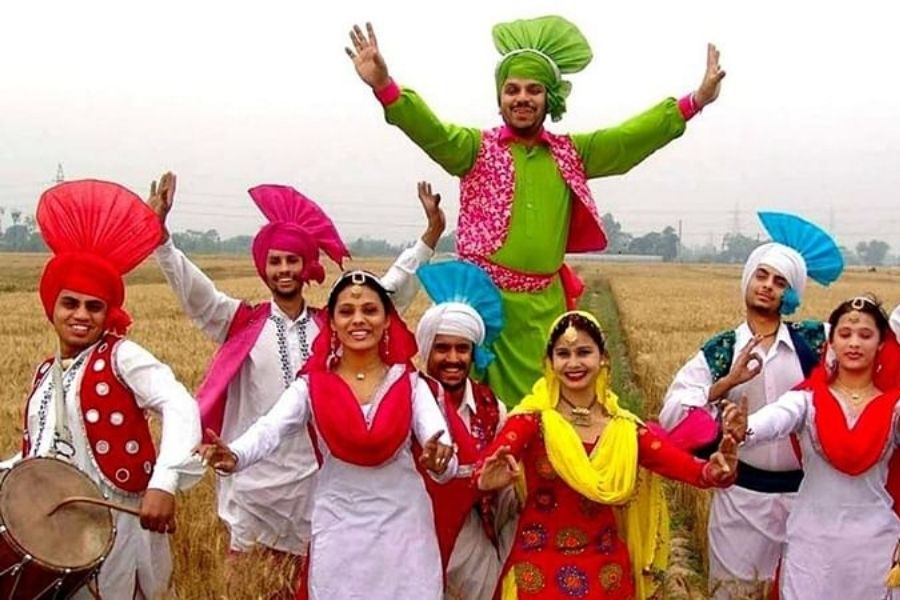
Baisakhi is a spring harvest festival celebrated by Hindus and Sikhs. It commemorates the Birth of Sikhism as a faith and marks the start of the Punjabi New Year.
Farmers pay their tribute to God for a bountiful harvest of the Rabi crops, while Hindus take a holy dip in the river Ganga. Sikhs visit gurdwaras, and processions are held in towns (called Nagar Kirtan) while singing hymns. The procession moves forward, carrying the holy book of Sikhs, the Guru Granth Sahib, as devotees sing folk songs and dance.
It’s your chance to feel the festive spirit and learn about Punjab’s culture.
Raksha Bandhan

When: Friday, 28 August 2026. It is celebrated on the full moon day of the Hindu calendar’s Shravan month.
Where: Northern and North-western India
Age Group: For everyone
It is a festival celebrating the love between brothers and sisters. The bond the siblings share is special, and on this day, they make a point of visiting each other and celebrating it with gusto. The sisters tie a colorful, sacred thread called “Rakhi” on their brothers’ wrists and pray for their well-being and long life. The brothers promise to protect and take care of their sisters at all times. The literal meaning of the word Raksha Bandhan is “bond of protection.”
There are many stories in Hindu mythology regarding the festival. It is believed that once, Lord Krishna got hurt in a war and was left with a bleeding finger. Seeing this, Draupadi, the wife of the Pandav kings, tore a piece of cloth from her saree and tied it on Lord Krishna’s finger.
Lord Krishna was touched by this gesture and felt obligated toward her sister’s love. After some years, after the Pandavas lost to the crooked Kauravas in a game of dice, the Kauravas pulled Draupadi‘s saree. At that time, Lord Krishna protected her dignity using his divine powers.
Another story is that of the widowed Hindu Queen Karnavati, who sent a Rakhi to Mughal Emperor Humayun, asking for help protecting her kingdom from Sultan Bahadur Shah’s invasion. Receiving the Rakhi, an overwhelmed Humayun ordered his troops to help the queen.
Janmashtami

When: Friday, 4 September 2026. It takes place on the eighth day (Ashtami) of the Krishna Paksha (dark fortnight) in Shraavana (the fifth month of the Hindu calendar) or Bhadrapada (the sixth month of the Hindu calendar), depending on whether the last day of the month is a new moon or a full moon day.
Where: All over India, especially in Mathura and Vrindavan
Age Group: All age groups
Krishna Janmashtami, or Gokulashtami, is one of the major Hindu festivals in India that celebrates the birth of Lord Krishna, the 8th avatar of Lord Vishnu. Legend has it that Lord Vishnu reincarnated himself as Krishna to bring hope and life by freeing the world from the despotism of evil rulers.
Devotees fast until midnight, visit temples, sing bhajans (devotional songs), and offer prayers to Lord Krishna. The fun part is Dahi Handi, where devotees string a clay pot full of yogurt as high as they can and form a human pyramid to reach and break it. Mumbai is the best place to witness the Dahi Handi competition.
In addition to the temples in Mathura and Vrindavan, ISKCON temples worldwide have special celebrations. It’s incredible to witness the devotees of Lord Krishna sway to the tune of “Hare Krishna.” The fervor and enthusiasm are contagious.
Indian festivals are fantastic, aren’t they? Well, you have to witness them to understand the beauty and diversity of Indian culture and traditions.
Save the Best Indian Festivals to Pinterest
