Plan your trip smart with this no-nonsense Tashkent itinerary. A practical, all-inclusive guide to spending 1, 2, or 3 days in Uzbekistan’s capital, covering the best sights, routes, tips, and real travel advice that actually makes sense.
Before visiting Tashkent, aka Toshkent, I had read extensively about its Silk Road past, the 1966 earthquake that destroyed it, and how the Soviets rebuilt it into a planned, modern capital.
Photos of its spotless streets, chandelier-lit metro, and Soviet squares had already set high expectations.
But reading about a city and walking through it are never the same. Tashkent turned out to be far more layered than I imagined.
BTW: We had actually planned Georgia this season, but fate had other ideas. So, Uzbekistan it was, and honestly, I couldn’t have asked for a better twist.
The marble metro, once built as a bomb shelter, now glows with mosaics and chandeliers. The Khast Imam complex preserves one of the world’s oldest Qurans. And under the turquoise dome of Chorsu Bazaar, the art of bargaining and bread-breaking still thrives.
Tea and bread carry their own rituals here: a cup is poured three times before serving, and a loaf is treated with quiet reverence. That old saying still rings true: “Mehmon otangdan ulug,” meaning the guest is greater than your father.
Across the city, everything runs smoothly: clean parks, calm traffic, friendly faces, and a mix of Uzbek and Russian that speaks of many cultures living side by side. You’ll even find quiet connections to India and Korea woven into daily life.
If you’re planning 1, 2, or 3 days in Tashkent, this itinerary keeps it simple: what’s worth seeing, how to get around, and a glimpse into the city that rebuilt itself yet stayed true to who it is.
Planning the full Silk Road trip? Tashkent is your starting (or ending) point in our 2-week Uzbekistan itinerary, covering Samarkand, Bukhara, Khiva, Fergana Valley, and the Aral Sea.
Heads up: some links here are affiliate links. That means if you click and buy something, I may earn a teeny-weeny commission (think chai money, not a private jet) at no extra cost to you. It’s a small way to keep this blog running, the words flowing, and the pages free for you to enjoy. I only recommend things I truly love, use, or secretly wish I invented, because trust matters, and so do good recs. Thanks for supporting the little cozy corner of the internet I call my virtual home.
Tashkent Itinerary
This itinerary is built to fit every kind of traveler, whether you’re spending just one day in Tashkent or stretching it to three.
Day 1 encompasses all the essentials: the must-see sights and experiences that provide a complete taste of the city in 24 hours. Days 2 and 3 go a little deeper, for those who like to linger, explore lesser-visited spots, or see what lies beyond the obvious.
Use it as it suits you. Follow it day by day or mix and match. Either way, you’ll leave knowing Tashkent a little better than you expected to.
Day 0: Arrive in Tashkent
Depending on when your flight arrives, you might step into the city at sunrise or late evening; either way, expect a smooth, efficient welcome.
If you’ve had a long flight or crossed time zones, take it easy today. Check into your hotel, freshen up, and rest a bit before heading out. A short nap or a slow breakfast can make all the difference in shaking off travel fatigue.
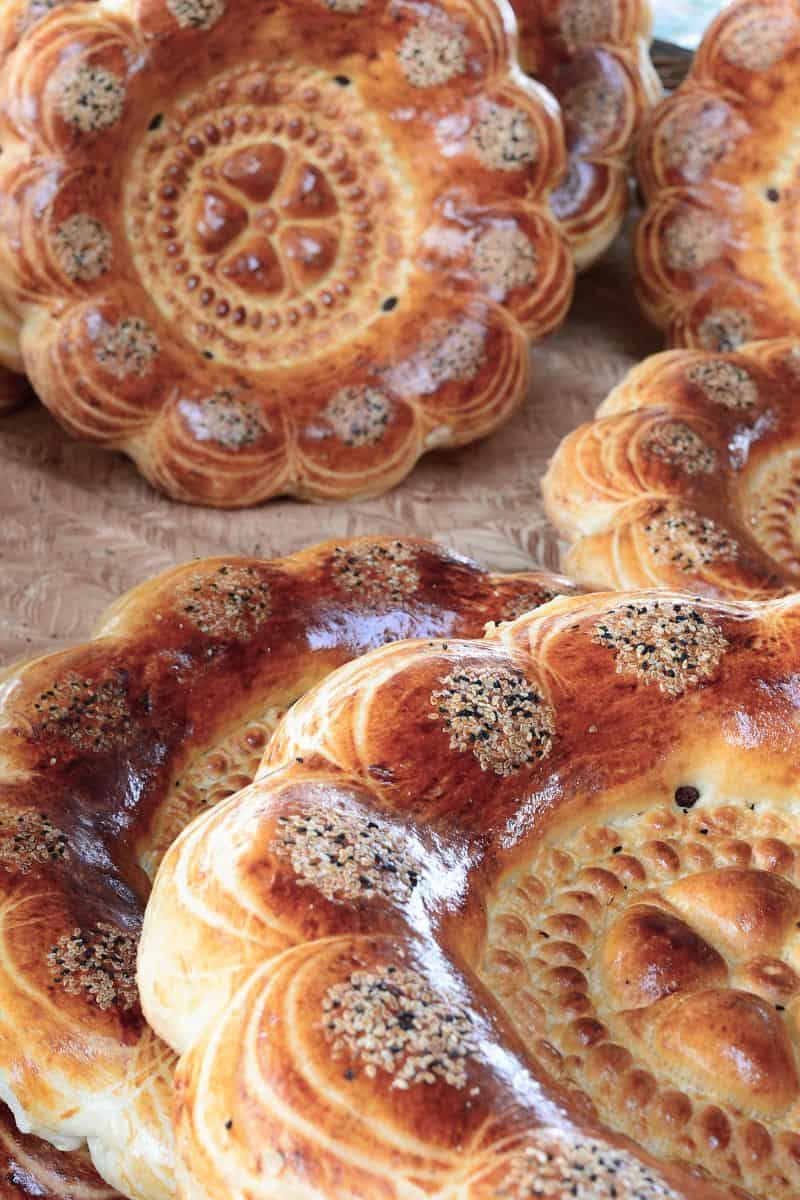
If you have energy, step outside and let your first impressions sink in. Take a short stroll near your hotel or visit a nearby café for your first taste of Uzbek tea and Non bread.
You’ll instantly feel the warmth people here are known for: friendly smiles, small gestures of help, and a genuine curiosity toward visitors.
As for us, we had a short three-hour flight from India and landed around noon, when the city felt bright and unhurried, a lovely time to arrive.
The airport is small and easy to navigate, so while you wait for your luggage, you can get a few essentials sorted.
Pick up a tourist eSIM. If you want to stay connected the moment you land, you can pre-book an eSIM through Airalo and activate it on arrival, or buy one at the airport itself. Ucell is best for wide coverage across the country (even in remote areas), while Beeline works well in the cities.
Next, sort your cash. You can exchange currency at the airport, but using ATMs is generally the smarter choice. The withdrawal fee is minimal; our bank charged just about $1.13 per transaction, which was cheaper than the exchange counter rates.
The local currency is the Uzbek Som; US dollars are accepted in most hotels and restaurants. Local bazaars prefer Som.
Book your hotel near the city center. I can’t recommend it enough. It saves precious commuting time, especially if you’re traveling with kids or teens and have a packed itinerary. You’ll thank yourself later when everything from cafés to parks is just a short walk away.
Tashkent’s airport is just about 10–15 minutes from the city center, so getting to your hotel is quick and hassle-free, one of the many little things that make arriving here feel easy.
Once you’re done, call a Yandex taxi to your hotel right from the app. It’s simple, safe, and budget-friendly, though private transfers arranged online or through your hotel are also affordable.
You’ll quickly notice how affordable traveling across Uzbekistan feels, almost on par with Indian prices, and for travelers from the US or Europe, it’s pure luxury without the splurge.
If you’re traveling light, you can even hop on one of the public buses (Line 67/Line 11) that stop right outside the airport; they’re the cheapest way to reach the city center, though not the most convenient if you’re carrying heavy luggage.
We had half a day in Tashkent, so we took it slow. After checking in, we rested, grabbed lunch, and then stepped out to get our first real feel of the city.
I’d grown up hearing the name Tashkent, its link to the Soviet Union, and the death of India’s former Prime Minister Lal Bahadur Shastri. So seeing it in person felt oddly familiar.
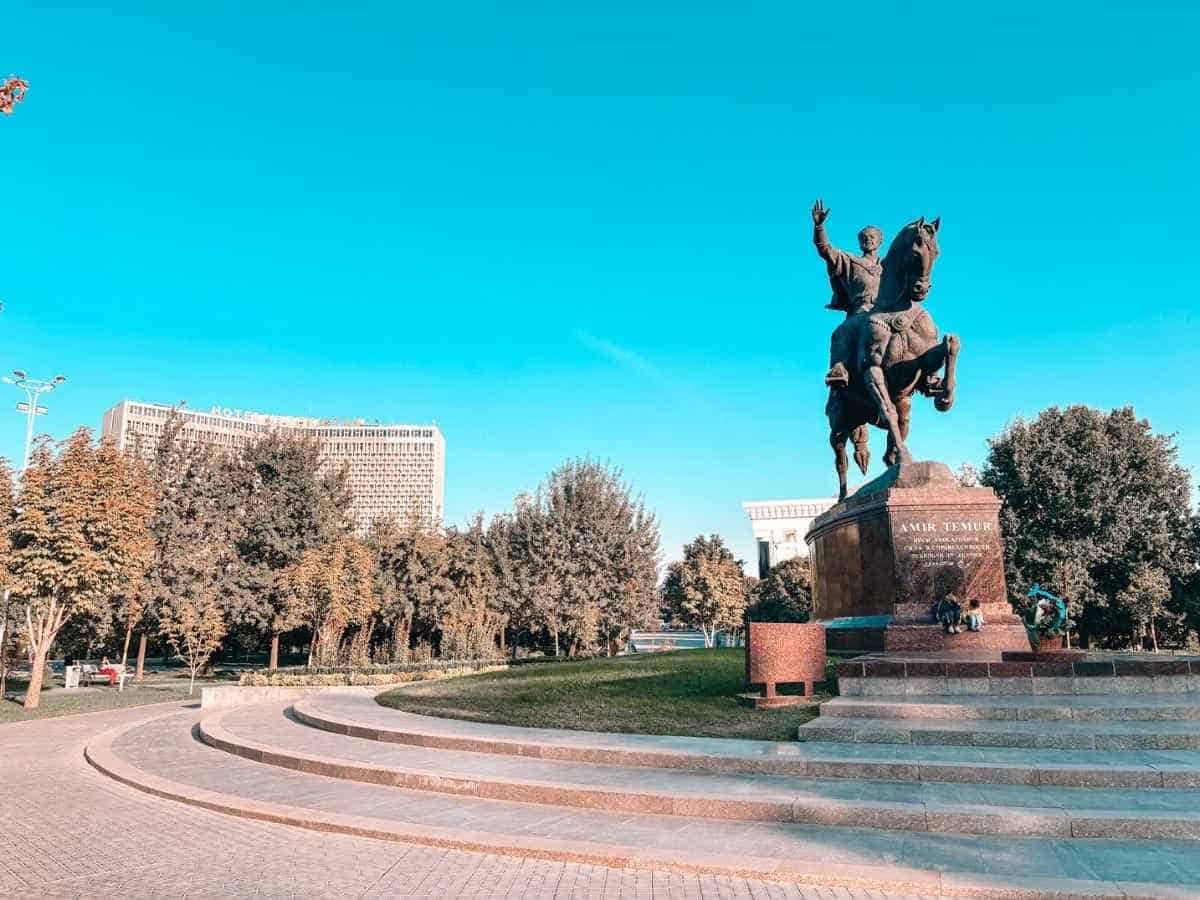
We wandered around Amir Timur Square, strolled down Sailgokh Street, fondly called Tashkent Broadway, where the lights and buzz pick up beautifully in the evening, and grabbed a quick bite along the way.
A few boulevards, some narrow lanes, and a lot of quiet charm later, we ended the day with dinner at Plov Lounge. It wasn’t tiring at all; in fact, it felt refreshing, like the perfect start to the trip.
Our Top Pick for Staying in Tashkent

Ichan Qal’a Premium Class Hotel
Location: Yakkasaroy District, about 10 minutes from Tashkent International Airport and close to the city’s main landmarks.
Inspired by traditional architecture, it combines arched gateways, tiled courtyards, and carved wooden details with all the comforts of a modern stay, Ichan Qal’a feels more like an elegant Uzbek villa than a city hotel.
Day 1: Explore the Heart of Tashkent
Start your first morning in Tashkent with a good local breakfast, maybe some warm non bread with apricot jam and tea, before heading out to discover the city’s must-see sights.
And if your morning starts at Ichan Qal’a, you’ll be treated to a buffet breakfast worth standing up for, featuring fresh Uzbek breads, fruit, yogurt, and cereals served in a charming garden courtyard, often accompanied by live musicians.
Today is all about understanding Tashkent’s character: its history, culture, and that calm rhythm that instantly grows on you.
9 am: Khast Imam Complex
Begin with the Khast Imam Complex, also known as Hazrati Imam Complex, the spiritual core of the city. This centuries-old ensemble of mosques and madrasas is home to the world’s oldest known Quran, believed to date back to the 7th century.
The complex includes the Barak Khan Madrasa, Tillya Sheik Mosque, Muyi Muborak Library, Hazrati Imam Juma Mosque, Imam al‑Bukhari Islamic Institute, and the Mausoleum of Abu Bakr Kaffal Shashi, a revered scholar after whom the place is named.
Each structure has its own story, from centuries-old mosaics to the library that guards the legendary Quran of Caliph Uthman.
A new addition is also taking shape nearby, the Center for Islamic Civilization, a modern museum and cultural hub being built to showcase Uzbekistan’s deep Islamic heritage and welcome more visitors in the years ahead.
The square is quiet and peaceful, with turquoise domes shining under the sun. You’ll likely hear the soft hum of prayers mixing with the chatter of visitors, a perfect first glimpse into Uzbekistan’s faith and craftsmanship.
10:30 am: Chorsu Bazaar
Just a short ride (metro or taxi) away is Chorsu Bazaar, the city’s beating heart. Under its giant blue dome, the air is filled with the scents of spices, fresh bread, and dried fruits.
It’s not just a place to shop but to experience the everyday pulse of Tashkent: vibrant, friendly, and full of life.
Locals bargain for vegetables, and you’ll find vendors proudly offering samples of melon or walnuts.
Don’t rush through Chorsu. It’s filled with so many small moments to pause for. A true slice of local life, I’d say.
Wander through the food section, stop to taste dried apricots or honey, and don’t forget to climb to the second floor to watch the scene unfold from above.
Step behind the main dome, and you’ll spot locals baking non in traditional clay ovens. The smell of warm bread and sesame fills the air before you even see the tandoor.
Nearby, stalls are stacked with colorful Uzbek sweets, from halva, chak-chak, and sugar-dusted pastries that locals pack home by the kilo.
You’ll also find a gold market tucked into the Chorsu maze, a cluster of jewelry shops known locally as the Chorsu Gold Center, with more counters down in the basement corridors behind the main dome.
Our guide said many Indian travelers browse here because prices can be lower than back home, and we did the math too. The rates tracked closely to the day’s gold price, and most pieces carried hallmarks like 585 or 750 stamped on the clasp.
Designs leaned bold and shiny, more Middle Eastern in style than Indian finework, so to our eyes, some pieces felt less refined.
If you plan to buy, check the hallmark, confirm the weight using a scale, and request a printed receipt that notes the purity.
Tip: The Chorsu Metro Station (on the blue line) is right next to the bazaar. It’s the perfect place to start your Tashkent Metro tour, not just a ride, but an experience.
12:30 pm: Kukeldash Madrasah
Just a few steps from the Chorsu dome, you’ll find the Kukeldash Madrasah, built in the 16th century and one of Tashkent’s oldest surviving Islamic schools.
With a brick façade, a calm courtyard, and carved wooden balconies, it’s one of Tashkent’s best-kept old-town landmarks. It’s still a working madrasah, with classes held in the cells lining the courtyard, so only the outer areas are open to visitors.
When we visited, we paid the modest entrance fee (around 10,000 UZS) and spent just five minutes walking around the central garden before the classrooms caught our attention, and we stepped back.
If you’re time-tight, it’s perfectly fine to admire the façade and courtyard from outside rather than go in fully.
12:40 pm: Tashkent Metro Tour
From there, hop on the Tashkent Metro, an attraction in its own right, I mean, far more than public transport.
Built during the Soviet era, each station feels like a unique art gallery, featuring marble pillars, chandeliers, mosaics, and elaborate ceilings, each with its own theme. The best part is that a single ticket lets you admire these stunning stations for just a few cents.
Some of the most beautiful stations include Kosmonavtlar (themed around the Soviet space age with deep blue mosaics of astronauts and planets), Alisher Navoi Station (grand and elegant, named after Uzbekistan’s national poet), and Mustaqillik Maydoni Station (stunning with white marble columns and symbolic carvings of independence).
Photography was once banned inside the metro because the stations doubled as bomb shelters during Soviet times. That rule’s long gone now, so feel free to take photos, avoiding tripods and flash.
And remember, don’t block the way while clicking. In my excitement, I stood on the steps trying to frame the perfect shot, and a transport police officer (metropolitsiya) quickly reminded me that taking photos is fine, blocking the flow of passengers is not.
We spent almost half a day riding the metro, hopping from one line to another, to see how each station looked and how the city moved. It turned into more than an architecture tour; it was a peek into daily life.
School kids giggling with backpacks, office workers half-asleep on their commute, old men reading newspapers, and us, standing, squeezing in, and getting unreasonably happy each time we found a seat. The metro was crowded most of the time, but that’s what made it real. It was art and life in motion.
Note: If you only have one day in Tashkent, you won’t have the luxury of choosing when to explore the metro. You’ll likely be in it during peak hours. But if you do have time, our guide suggested the best times are around noon and late evening, when the rush eases, and you can pause to take in the details without feeling hurried.
1:40 pm: Mustaqillik Maydoni
Next, head to Mustaqillik (Independence) Square, the symbolic heart of modern Uzbekistan. It’s wide, open, and impeccably maintained, lined with archways, fountains, and government buildings.
At the heart of the square stands the Monument of Independence and Humanism, also known as the “Mother and Child” monument. It’s a bronze statue of a woman holding her baby, symbolizing the birth of an independent Uzbekistan and its hope for a peaceful future.
Nearby, Bronze storks rise, telling the story of the country’s freedom and new beginnings. The whole area feels more like a park than a square.
A short walk from here takes you into Memory and Honor Square, aka Memorial Square, home to the “Grieving Mother” monument, part of the Memorial to the Fallen Defenders of the Motherland.
Here, a solemn bronze mother sits in mourning beside the Eternal Flame, honoring the nearly two million Uzbeks who fought in World War II, many of whom never returned.
Built in 1993, it’s one of the most moving places in Tashkent, a poignant reminder of the country’s enduring suffering and its deep commitment to remembrance.
Surrounded by some of the country’s most important cultural and political buildings, it feels like one of Tashkent’s most elite and secure areas.
You’ll see the Senate and Cabinet of Ministers buildings on one side, and the Presidential Palace (formerly known as the White House) complex in the distance, which is understandably off-limits but still impressive from afar.
Nearby stands the Ministry of Finance, another grand Soviet-era structure that adds to the area’s stately feel. Just beyond, the elegant Turkiston Palace, built after independence, hosts concerts and national events under its gleaming white domes.
Keep your camera ready, but be discreet; photography facing government buildings isn’t encouraged, and police officers (politely but firmly) may remind you of that.
Just beyond this area, inside Alisher Navoi National Park, stands the Palace of Friendship of Peoples, a 1980s Soviet-era landmark built to celebrate unity among nations. Today, it hosts concerts and cultural events, its geometric façade and mosaics still carrying that sense of idealism from another time.
Even if it’s closed for an event, you can admire it from the park’s tree-lined paths before you continue toward the Navoi Opera and Ballet Theater nearby, one of the most beautiful buildings from the Soviet period.
Designed by the same architect who built Lenin’s Mausoleum in Moscow, it blends European classical style with Uzbek craftsmanship, high arches, carved ceilings, and patterned tiles. It’s worth stopping to admire the exterior, or even stepping in to check the performance schedule if you plan to return in the evening.
2:30 pm: Lunch at Central Asian Plov Center
Once you have finished exploring Mustaqillik Maydoni, take a short taxi ride or metro hop to Bodomzor Metro Station, where the Central Asian Plov Center awaits, the city’s most famous spot for a traditional Uzbek lunch.
Watch chefs stir massive cauldrons of rice, carrots, and lamb, each batch serving hundreds of people.
If you’re vegetarian or vegan, don’t skip it. Ask for a meat-free version, cooked without lamb fat or sausage; they can accommodate the request. It’s simpler and lighter but still full of that fragrant carrot-and-spice flavor that defines Uzbek plov.
Pair it with fresh salad and green tea, and you’ll leave just as satisfied, even without the meat.
4:30 pm: Amir Timur Square & Uzbekistan Hotel
End your day at Amir Timur Square, surrounded by gardens, museums, and some of the city’s finest architecture. Sit by the fountain as locals stroll past families, students, and friends, and let the evening light bring out the charm of Tashkent’s golden hour.
Oh, and before you settle by the fountain at Amir Temur Square, step inside the State Museum of the Temurids, right across the road. Its blue dome glints in the sunlight, and inside you’ll find everything about Amir Temur (Tamerlane) and his dynasty: maps, royal correspondence, miniature art, even replicas of his throne and armor.
The exhibits tell how his empire once stretched from Delhi to Damascus, but what stands out most is how much pride modern Uzbekistan takes in that legacy. You won’t need more than 45 minutes here, but it adds a solid layer of context to the statue standing tall outside.
As you come out of the museum, directly across from you is Hotel Uzbekistan, a grand example of Soviet architecture that dominates the skyline. Built in 1974, its honeycomb-patterned façade is one of the city’s most recognizable landmarks.
You can even pop inside for a quick look at the lobby’s retro interiors, patterned carpets, and enormous concrete columns, a reminder of how Tashkent once dreamed in the Soviet years.
If you’re fascinated by Soviet history (or love staying somewhere that feels like a story), consider booking a night here. We actually tried to do the same, just one nostalgic night, but it was sold out when we arrived at the last minute. So, if you plan, you might get to sleep inside one of Tashkent’s most iconic time capsules.
A few minutes from the square stands the former palace of Grand Duke Nicholas Constantinovich Romanov, better known as Prince Romanov’s Palace. Built in 1891, this was no royal retreat but rather the duke’s punishment home after he famously stole his mother’s diamonds to gift his American dancer lover, Fanny Lear. Exiled to far-off Tashkent, he built this pale, neoclassical mansion and spent his later years quietly helping modernize the city.
Today, the palace sits behind a fence between Independence Square and Amir Temur Square, along Broadway Alley. You can’t go inside. It now belongs to the Ministry of Foreign Affairs, but it’s still worth a brief stop. A quick peek through the gate for a photo is enough; ten minutes here gives you a glimpse of imperial drama tucked neatly into modern Tashkent.
5:30 pm: Tea or Coffee at Sayilgoh Street
A short walk from Amir Temur Square takes you to Sayilgoh Street (locals call it “Broadway”). It’s lively in the evenings, filled with street artists, souvenir stalls, and small cafés. Stop for a cup of tea or coffee at Book Cafe or Art Cafe, sit under the chestnut trees, and people-watch for a bit.
8 pm: Dinner at Caravan Restaurant
For dinner, head to Caravan Restaurant (about 2 km from Broadway), one of Tashkent’s most loved places for Uzbek cuisine.
The decor is traditional, complete with rugs, lanterns, carved wood, and the menu covers everything from shashlik to manti and lagman. The portions are hearty, the atmosphere warm, and it’s the ideal spot to wrap up your first day or your only one.
If you only have one day in Tashkent, this itinerary covers every highlight you’d regret missing, from sacred history and bustling markets to Soviet art and Uzbek flavors.
Recommended Tours to Explore Tashkent

Tashkent City Highlights Walking Tour
Step into the heart of Tashkent on this half-day guided walk through mosques, markets, and metro art, all accompanied by a local guide who brings history to life through engaging stories.

Tashkent City Tour with Plov Lunch
Covering the Hazrati Imam Complex, Chorsu Bazaar, Courage Earthquake Memorial, & Minor Mosque, with hotel transfers, entry tickets, & a plov lunch included, this tour is the easiest way to experience Tashkent in one go.
Ten Bites Food Adventure in Tashkent
Taste your way through ten local favorites! Led by a local foodie, this tour is equal parts culture and cuisine, a full-senses introduction to Tashkent’s flavors, stories, and everyday life.
Day 2: Art, Heritage, Reflection, and a Little Magic in Tashkent
Start your second day in Tashkent on a slower note. This one’s less about rushing between landmarks and more about letting the city unfold gently. Have breakfast at your hotel or step out for something local and comforting. Breadly Café is a favorite for its fresh pastries, good coffee, and easy morning buzz.
If you’re in the mood for something more modern and filling, Elements Gastro Café serves hearty plates and strong espresso to get you going before the day unfolds.
9:00 am: Museum of Applied Arts
Start your morning at the Museum of Applied Arts, tucked inside a former Russian diplomat’s mansion that now feels more like a jewel box than a museum. Every inch: the carved ceilings, painted doors, and tiled walls show how art once lived in everyday Uzbek life.
Inside, you’ll find hand-embroidered suzani, silk ikat fabrics, ceramics, and jewelry that reflect the country’s craftsmanship beyond time. It’s small, peaceful, and unhurried; an hour here feels like a soft start to the day.
10:30 am: Minor Mosque
Next, visit the Minor Mosque, often called the White Mosque for its marble glow that catches the morning light. Built in 2014, it stands gracefully by the Ankhor Canal, a modern reflection of traditional Uzbek design.
12:00 pm: Light Lunch at Affresco or Socials Café
By noon, stop for lunch at Affresco, known for its shaded garden and mix of Uzbek and European dishes, or Socials Café, a bright spot popular with locals for salads, pasta, and strong coffee. Both are easy-going, vegetarian-friendly, and perfect if you want a break from heavy meals.
1:30 pm: Tashkent City Park and Magic City
After lunch, make your way to Tashkent City Park, one of the newest and most beautifully landscaped parts of town. The lake, music fountains, and well-kept lawns make it easy to linger.
Across the road sits Tashkent City Mall, the city’s newest high-end shopping hub that feels worlds apart from its old Soviet charm.
We stopped here one afternoon while mall-hopping on our free day, and while the stores are the same luxury brands you’d find anywhere, it was more of a window-shopping kind of stop. What caught my eye was the food-court terrace and, of all things, the luxury car displays.
Up on the upper floor, there’s a terrace overlooking the trees of the park, cafés with strong coffee and burgers (or veggie wraps if you prefer), and a relaxed place to rest your feet.
Down inside the mall, you’ll spot gleaming Bentleys, Porsches, and classic European models parked like art pieces.
Right next to it is Magic City, a playful space of cafés, art corners, and canals that feels like a cross between a film set and a fairground. It’s more about the vibe than the attractions, a nice way to see where locals unwind.
We visited twice during our stay in Tashkent, once during the day to stroll around and shop a little, and again at night when the whole place lights up and feels completely different. It’s one of those spots where you can easily spend a few hours eating, people-watching, and just soaking in the vibe.
Stay till evening if you can. The fountain show is worth it. The jets of water dance to music, illuminated by colorful lights and lasers, creating a surprisingly dramatic scene against the night sky.
The shows usually run around 7 pm and 8 pm, sometimes again at 9 pm on weekends, and it’s free to watch. We grabbed tea from one of the lakeside cafés and just sat there, letting the moment play out.
3:30 pm: Memorial to the Victims of Repression & State Art Museum of Uzbekistan
Take a short drive to the Memorial to the Victims of Repression, across the Ankhor Canal, opposite the Tashkent TV Tower.
Built in the late 1990s, this peaceful complex honors those who suffered under Stalin’s purges and political repression.
A turquoise-domed rotunda stands at its center, surrounded by gardens and small bridges that make the place feel more like a park than a memorial.
Inside the adjoining museum, you’ll find photos, personal stories, and artifacts that tell the darker side of Uzbekistan’s Soviet past. Even if you spend just 30–40 minutes here, it leaves a mark — quiet, powerful, and deeply human.
If you’re more in the mood for culture than contemplation, pair this stop with the nearby State Museum of Uzbekistan. It’s one of the country’s largest museums, covering everything from the Stone Age and Silk Road artifacts to independence-era exhibits.
The highlight for many is the gallery of ancient manuscripts and intricate jewelry, each piece revealing the true richness of Uzbekistan’s artistic heritage.
Heads-up: the State Art Museum of Uzbekistan is currently closed for renovations, so skip it if you’re sticking to Day 2. Keep an eye on their website or local travel updates in case they reopen before your trip.
Both spots sit close to the government district, so expect neat streets, wide boulevards, and well-kept lawns. You can easily visit both in the same stretch of the afternoon before heading toward the TV Tower for evening views or dinner at a nearby restaurant.
5:30 pm: Tashkent TV Tower and Evening Views
As the sun dips, head to the Tashkent TV Tower, the tallest in Central Asia. The observation deck offers a broad view of the city’s ordered streets, green belts, and distant mountains if the weather’s clear.
Watching the city shift from day to dusk from up here gives you a quiet sense of how much Tashkent holds: history, resilience, and hope in equal parts.
7:30 pm: Dinner at Sim-Sim or The Terrace
Wrap up your day at Sim-Sim, a cozy spot near the tower known for grilled dishes and soft live music, or at The Terrace, where candlelight and city views meet a mix of Uzbek and international plates. Both serve vegetarian-friendly meals and have that relaxed, end-of-trip feel.
Day 3: Slow Mornings, Green Corners, and Creative Finds
Ease into your last day in Tashkent with a relaxed breakfast in your hotel or try Cafe Forn Lebnen, known for its warm flatbreads and Middle Eastern-style eggs, or Coffee Lab, a local favorite for fresh brews and friendly faces.
Or switch things up, perhaps, grab a seat at Arrows & Sparrows Café near Tashkent City Park for a slow brunch with a view, or try Pro Khinkali if you’re in the mood for a cozy Georgian breakfast with khachapuri that could easily pass for comfort food therapy.
9:00 am: Tashkent Botanical Garden
Begin your morning surrounded by trees, ponds, and pathways that feel miles away from city life. The Tashkent Botanical Garden is one of Central Asia’s oldest, spanning 65 hectares and featuring plants from around the world.
What makes it special is how it’s divided into different climate zones, from East Asia to Europe, each section with its own style of trees and flowers.
You’ll also come across ponds dotted with lilies, and if you walk a little further, the Hill of Wishes, where locals tie ribbons to branches hoping their wishes come true.
Locals come here for morning walks and quiet moments, and it’s an easy way to reset after days of sightseeing.
11:00 am: Street Art and Mosaic Trail
From here, head toward Kosmonavtlar Metro Station, where the nearby residential buildings feature colorful murals and striking modern street art.
Continue your mural walk toward the Broadway (Sayilgoh) Street stretch between Amir Temur and Independence Squares, where you’ll spot pop-up art, small exhibitions, and local painters displaying their work.
If you’re up for a detour, make your way to Urikzar Street in the Yakkasaray District, where Soviet-era mosaic panels called “Bayram” and “Asia” blend socialist imagery with Uzbek design, a quiet visual treat for art lovers.
Wear comfortable shoes and carry water as the mural trail between Kosmonavtlar and Broadway can take around 30 to 40 minutes on foot. Some murals sit on residential walls, so be mindful not to block doorways or photograph private spaces.
If you’re heading toward Urikzar Street, plan your visit before sunset, as the area gets quiet later in the day. Use the Yandex Go app or hop on the metro when you’re done instead of walking back.
And while taking photos, keep an eye out for “Фотосъёмка запрещена” (no photography) signs near government or residential buildings. When in doubt, ask politely.
Just before you wrap up the day with murals or galleries, make a quick stop at Human House Shop (43 Kichik Mirobod Street). It’s part shop, part gallery, part café, a cozy, creative space where everything feels handmade and human. You’ll find suzani textiles, ceramics, scarves, and crafts that look more like keepsakes than souvenirs.
We stopped for tea in their little courtyard and ended up chatting with the owner about Uzbek art and design, one of those unplanned moments that quietly become trip highlights.
It’s a short detour from the art route, small enough to explore in 20–30 minutes, and you’ll probably leave with something special tucked in your bag.
1:00 pm: Lunch & Coffee Break
Pause for lunch near Broadway (Sayilgoh Street). Stop at Art Café Bon!, loved for its artsy décor and relaxed vibe, or at Café Gallery 88, where local artists often showcase their work.
Both spots serve great coffee, light meals, and vegetarian-friendly options, making them the perfect mid-day break before you continue your mural walk.
3:00 pm: Ilkhom Theatre or Tashkent House of Photography
If you’re in the mood for culture, head to one of these spots:
Ilkhom Theatre, Central Asia’s first independent theatre, was founded in 1976. The building houses a small exhibition gallery showcasing local art, experimental performances, and photography. You may miss a whole show in the afternoon, but the space is worth exploring. Check the notice board or their website to see if there’s a short rehearsal or exhibition open to visitors.
Tashkent House of Photography is a quieter, more focused option dedicated entirely to the photographic view of Uzbekistan. Exhibits change regularly and often capture daily life, landscapes, and social moments from around the country. Great for a reflective break. Ask for the English-language photo guide when you arrive.
Both spots are easy to reach, a short taxi ride or even a walk from Sayilgoh Street or the Broadway mural area.
Most days, they wrap up by 5 pm, so it’s best to get there around 3 to make the most of your visit. Entry is usually free or costs next to nothing, but it’s nice to keep some small change handy for donation boxes or a quick coffee.
You can take photos on your phone, keep your voice low, and be mindful if there’s a rehearsal or exhibit in progress, the whole place has this quiet, creative energy that deserves a bit of respect.
6:30 pm: Navoi Opera and Ballet Theater
End your day on a grand note at the Alisher Navoi Opera and Ballet Theater.
You’d admired its grand façade earlier on Day 1, but stepping inside is a whole different experience. The interiors are breathtaking: high arches, intricate carvings, and chandeliers that make you feel like you’ve entered another era.
If you can, book a ticket in advance through their official website or at the box office during the day. The schedule often includes classics like Swan Lake, Carmen, The Nutcracker, La Traviata, and local Uzbek ballets, all performed with a full orchestra, beautifully staged, and surprisingly affordable.
The performances usually start around 6:30 pm, so plan to arrive a bit early to soak in the atmosphere. After the show, take a slow walk through Navoi Park right next door; the fountains glow in the evening light.
8:30 pm: Dinner at MiraMandi or Tarnovbashi
If you want to end your Tashkent trip on a delicious note, you’ve got two great dinner options: MiraMandi and Tarnovbashi, each offering a different slice of the city’s food culture.
MiraMandi is a stylish spot that feels lively yet intimate. It’s known for its cozy setting, beautiful presentation, and dishes that blend local and international flavors, perfect if you want a slightly fancier meal to wrap up your trip. Their kebabs, salads, and desserts are crowd favorites, and it’s an easy 10-minute drive from Navoi.
They also have a few vegetarian-friendly options like fresh salads, creamy soups, grilled vegetables, and even a falafel-style hot snack, so even non-meat eaters can enjoy a full meal without compromise.
If you’re after something more local and soulful, Tarnovbashi (or simply Tarnov) is about 15 minutes from Navoi, tucked in the Sebzar neighborhood. It’s less polished but full of heart, a family-run place with real Uzbek and Uyghur comfort food. The lagman noodles, grilled skewers, and plov are all worth trying, and the crowd is local, mainly regulars.
Though vegetarian choices are fewer, they’ll happily customize dishes if you ask. What truly stood out for us was their fruit tea. It was fragrant, slightly spiced, and served in a big glass pot that made us linger long after finishing our meal.
Both have their own charm: MiraMandi for atmosphere, Tarnov for authenticity. Either way, you’ll end the day (and maybe your Tashkent trip) the best way possible, with good food, local warmth, and that familiar feeling of not wanting to leave just yet.
So that’s all from Tashkent, the city everyone calls “just a stopover” but somehow ends up staying in your head longer than expected.
Many travelers said it’s less charming than Samarkand, Bukhara, or Khiva, but for me, it was the surprise of the trip. I didn’t come here expecting to fall for it, yet somewhere between its spotless metro, its calm rhythm, and the warmth of people offering tea every few hours, I did.
It may not have the postcard glamour of the Silk Road giants, but it has a soul that’s real, and that’s what makes it stay with you.
If you’ve been here or plan to go, I’d love to know what surprised you. Drop your Tashkent surprise in the comments and tell me if this itinerary actually helped or if you ended up finding your own secret corner of the city. I promise I won’t be jealous… maybe just a little.
More travel resources to plan your Uzbekistan trip
Save this Itinerary for Tashkent to Pinterest
